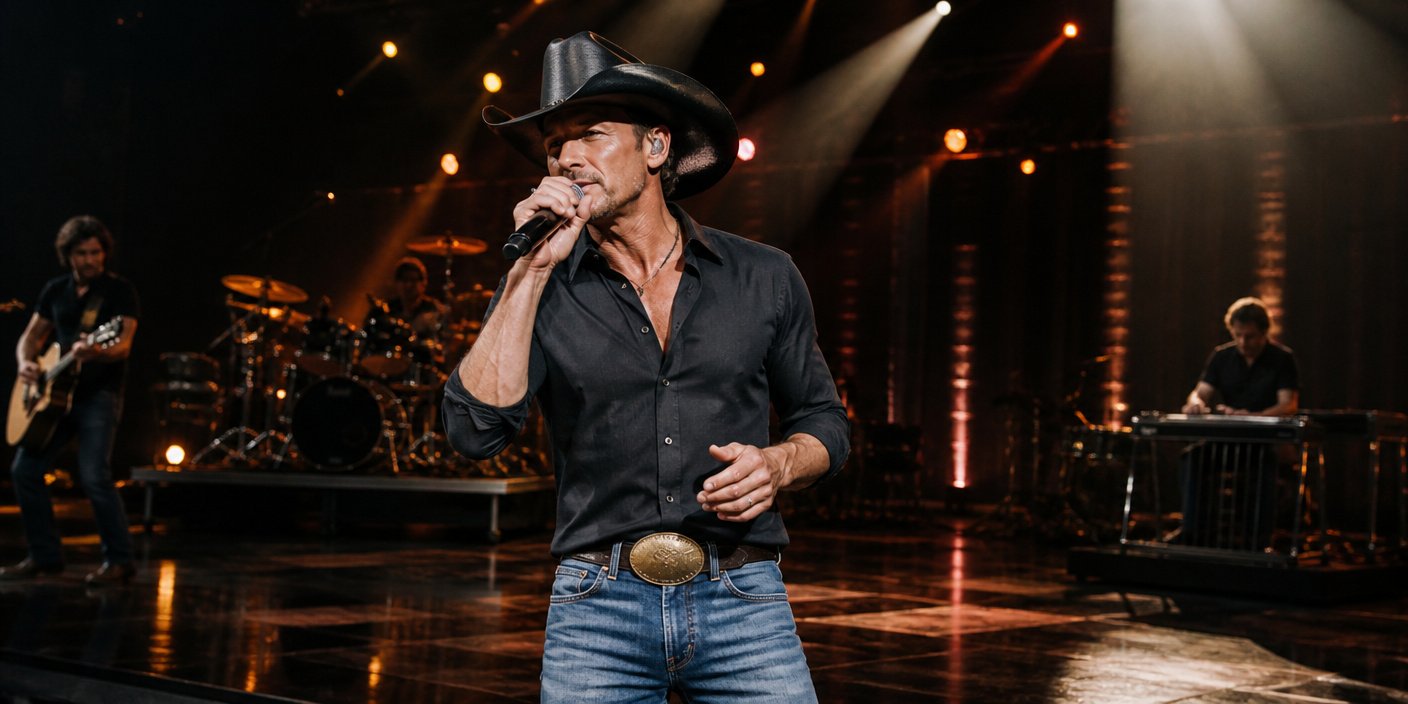
In the rarified air of country music history, few moments carry as much weight as a formal induction into the Country Music Hall of Fame. For Tim McGraw, this career milestone has not served as an endpoint, but rather as a lens through which to re-examine his vast catalog. Following the ceremony, McGraw delivered a hauntingly resonant performance of his 1994 breakout ballad, “Don’t Take The Girl,” at the CMA Awards, subsequently releasing a new live version of the track. This dual effort—honoring the past while breathing new life into a foundational piece of his discography—underscores a pivotal moment of artistic reflection for one of the genre’s most enduring icons.
The Weight of a Legacy: Beyond the Hall of Fame
The Country Music Hall of Fame does not merely recognize chart success; it validates cultural impact. For Tim McGraw, the induction acknowledges three decades of shaping the sound of modern country. However, the true mark of his legacy lies in his ability to bridge the gap between the “Neon Era” of the 1990s and the digital-streaming landscape of the 2020s. By choosing to perform “Don’t Take The Girl”—a song that served as his first number-one single—McGraw effectively bookended his career. The performance was not nostalgic filler; it was a deliberate statement on the endurance of traditional country storytelling. When McGraw hit the stage, the stripped-back arrangement allowed the narrative arc of the song—a young couple’s journey from childhood to parenthood—to resonate with a modern audience, proving that the emotional core of the track has not aged, even as the singer has evolved.
The Art of the Live Revival
The release of the new live version of “Don’t Take The Girl” serves as a masterclass in artist-led curation. In an industry where legacy catalogs are often left to automated streaming algorithms, McGraw’s decision to re-record and re-release a classic live version demonstrates an active management of his brand. This recording captures the gravel and gravitas that three decades of touring have added to his voice. Whereas the 1994 studio original was characterized by the youthful, hopeful tenor of a rising star, the new live version possesses the weight of experience. This is critical for his audience; it provides a direct comparison between the “McGraw of yesterday” and the “McGraw of today,” fostering a deeper connection with long-time fans while introducing younger listeners to the song’s roots.
Artistic Reflection and Industry Impact
Secondary to the performance itself is the economic and artistic trend McGraw is spearheading. Releasing live versions of classic hits is a strategic maneuver that keeps legacy tracks relevant in a playlist-driven ecosystem. By syncing the release of this track with his Hall of Fame induction, McGraw has created a media moment that drives streams on platforms like Spotify and Apple Music, while simultaneously reinforcing his stature as a premier live performer. This is not just artistic reflection; it is a sophisticated understanding of how country music functions in the 21st century. McGraw’s ability to remain in the zeitgeist without sacrificing his traditionalist roots provides a blueprint for other established artists who are navigating the transition from “current hit-maker” to “genre legend.”
The Cultural Endurance of ‘Don’t Take The Girl’
“Don’t Take The Girl” remains one of the most recognizable songs in the American songbook because of its universal themes. At the time of its release in 1994, it challenged the upbeat, rowdy conventions of the era, opting instead for a somber, emotional narrative. Its continued success speaks to the power of lyrical vulnerability. McGraw’s recent performance served as a reminder that the best country music is essentially short-form storytelling. By returning to this song now, he is asserting that his contribution to the industry was built on the foundation of relatable human experiences—marriage, faith, and the fragility of life. In an era often dominated by production-heavy anthems, McGraw’s return to this acoustic-driven staple is both a refreshing pivot and a reminder of where the genre finds its emotional anchor.
A New Chapter of Maturity
Looking forward, this moment signals a transition in McGraw’s professional trajectory. The Hall of Fame designation grants him a “legacy license” to be more experimental with his catalog. Fans should expect more reimagined versions of his 1990s and 2000s hits as he continues to tour. This is not merely about playing the hits; it is about recontextualizing them. As he steps into this new phase of his career, the focus shifts from chasing radio airplay to cementing the longevity of his work. The success of this recent release proves that the appetite for McGraw’s legacy music is not only present but thriving, provided it is treated with the care and artistic integrity that a Hall of Fame career demands.