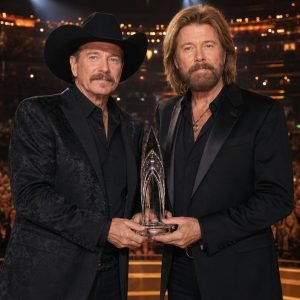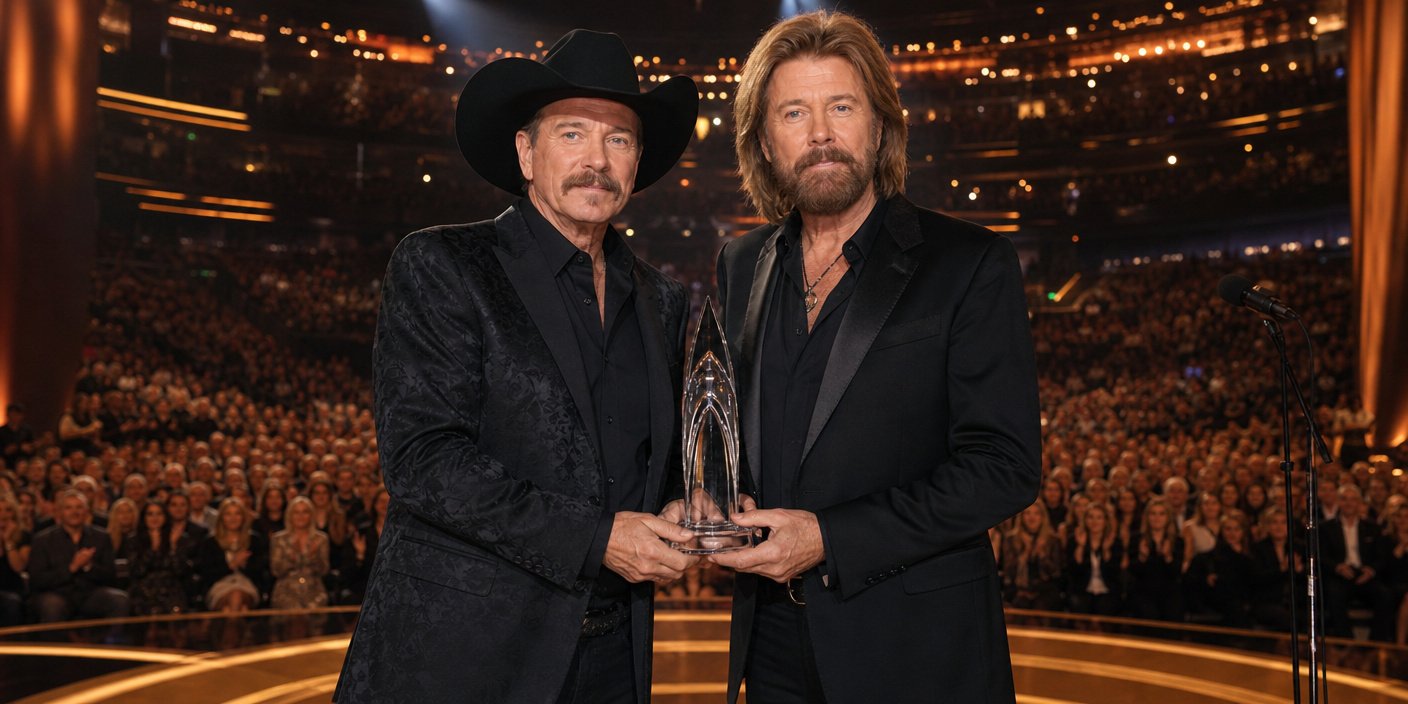
The 60th Annual CMA Awards, held on November 18, 2026, at the Bridgestone Arena in Nashville, Tennessee, served as both a celebration of six decades of excellence and a flashpoint for ongoing tensions within the genre. The event, which reached millions of viewers worldwide, concluded with a notable victory for Kix Brooks and Ronnie Dunn—collectively known as Brooks & Dunn—who secured the trophy for Vocal Duo of the Year. This win, while celebrated by traditionalists, has reignited a complex conversation regarding the ‘Legacy Artist’ dilemma: how the Country Music Association (CMA) balances the weight of historical contribution against the relentless push toward modern, pop-adjacent country.
Key Highlights
- Brooks & Dunn Victory: The duo captured the Vocal Duo of the Year award, signaling a strong voter preference for 1990s and early 2000s legacy acts.
- 60th Anniversary Milestone: The ceremony celebrated 60 years of the CMA, highlighting the evolution of the format from traditional honky-tonk to a global commercial juggernaut.
- Industry Discourse: Following the ceremony, critics and insiders have engaged in fierce debate over the CMA Voting Academy’s criteria and the potential marginalization of emerging artists.
- Economic Impact: The Nashville-based event continues to drive significant tourism and revenue, solidifying country music’s status as a dominant sector in the US music industry.
The Legacy Reckoning at the 60th CMA Awards
The victory of Brooks & Dunn at the 60th Annual CMA Awards was not merely a moment of nostalgia; it was a statistical anomaly that has prompted a deep dive into the demographics of the CMA Voting Academy. For many, seeing the veteran duo take the stage at Bridgestone Arena felt like a corrective measure—a nod to a ‘golden era’ of country music that prioritizes lyrical narrative and instrumentation over the synthesis-heavy production of the late 2020s. However, for a vocal contingent of industry analysts, this win represents a potential stagnancy.
The Resurgence of the Duo and the Voting Bloc
Brooks & Dunn’s win, coming mid-career for the duo, underscores a fascinating trend in how country music is currently being consumed. While streaming algorithms prioritize new, viral hits, the CMA electorate—comprised of industry professionals—often operates on a different frequency. By analyzing the voting patterns over the last three years, it is clear that there is an institutional bias toward ‘proven’ entities. This creates a friction point: the awards are intended to honor the best of the current year, yet they are increasingly becoming a platform for industry veterans to secure their legacy.
The Debate on Genre Purity
At the heart of the 2026 controversy is the definition of ‘Country’ itself. Throughout the broadcast, the divide was palpable. Younger artists, pushing the boundaries of what the genre can encompass by incorporating R&B and hip-hop influences, often found themselves relegated to the periphery. In contrast, the segments dedicated to the 60th anniversary leaned heavily into the traditionalist roots. The CMA Voting Academy is currently facing pressure to refine its criteria. Does the award recognize cultural impact, or simply, as one high-profile critic put it, ‘a reflection of the establishment’s comfort zone?’
Economic Impact: Nashville as the Hub
The CMA Awards are more than just a trophy distribution; they represent the economic engine of Nashville, Tennessee. The 60th anniversary event saw an estimated 15% increase in local tourism revenue compared to the 2025 cycle, further cementing the city’s dominance as a music industry hub. For the Country Music Association, the challenge is maintaining this commercial momentum while ensuring the artists driving that revenue feel seen and validated by the institution.
Future Predictions: The 2027 Pivot
As the industry looks toward 2027, the focus shifts to how the CMA will adapt its voting structure. There is internal speculation regarding a potential overhaul of the voting panel, specifically focusing on introducing a higher percentage of younger, streaming-focused industry professionals. If the academy fails to bridge the gap between the legacy winners of 2026 and the emerging market leaders, the relevance of the ‘CMA’ brand may be at risk. The 60th anniversary was a success by metrics of viewership and revenue, but the ‘vibes’ in the industry suggest a turning point. Will 2027 be the year of the youth movement, or will the institution double down on the legacy acts that built the foundation?
FAQ: People Also Ask
Q: When did the 60th Annual CMA Awards take place?
A: The ceremony was held on November 18, 2026, at the Bridgestone Arena in Nashville, Tennessee.
Q: Which major award did Brooks & Dunn win?
A: Brooks & Dunn won the award for Vocal Duo of the Year, marking a significant win for the legendary act during the 60th-anniversary celebration.
Q: Why is there controversy surrounding the 2026 CMA Awards?
A: The controversy centers on the ‘Legacy Artist’ versus ‘Modern Artist’ debate. Industry professionals are split on whether the CMA Voting Academy is favoring established legacy acts too heavily, potentially stifling or ignoring the new, diverse sounds emerging in the country genre.
Q: What is the significance of the CMA Voting Academy?
A: The CMA Voting Academy is the body of industry professionals responsible for nominating and selecting winners. Their voting patterns effectively dictate which artists receive the ‘stamp of approval’ from the establishment, making their demographic composition a subject of high scrutiny.