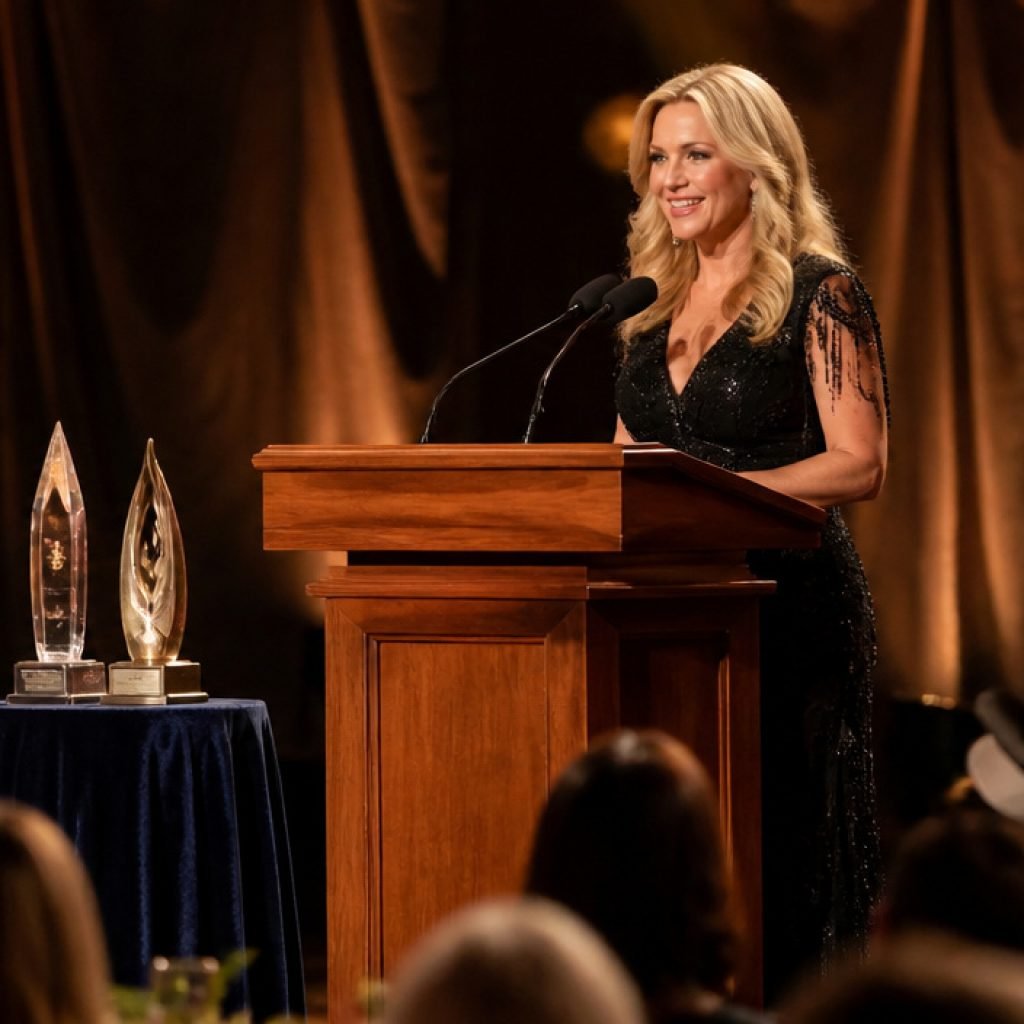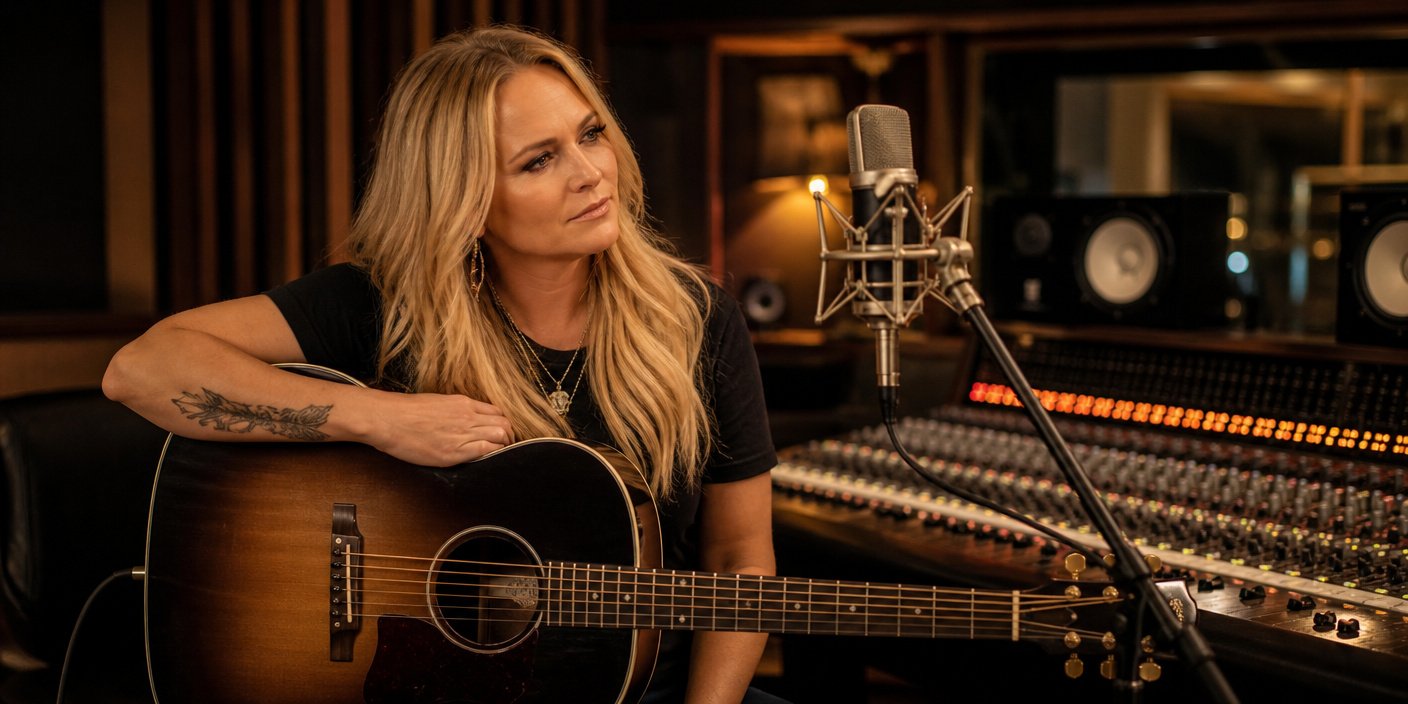
Following a commanding appearance at the 60th Annual CMA Awards, Miranda Lambert is vocalizing a paradigm shift in her professional life, prioritizing “space” as a fundamental requirement for her creative evolution. For a perennial titan of country music, this move isn’t just about taking a break; it is a calculated artistic strategy designed to protect the integrity of her future work in an industry that demands constant, high-speed output.
Key Highlights
- Strategic Decompression: Lambert emphasizes that reclaiming personal time is essential for producing authentic, legacy-defining music.
- Post-CMA Clarity: Her appearance at the 60th Annual CMA Awards served as a punctuation point, signaling a transition from relentless touring cycles to a more deliberate creative phase.
- Creative Autonomy: The “space” initiative is tied directly to her desire to exert total control over her artistic narrative as she moves into her next project.
The Architecture of Creative Autonomy
For artists of Miranda Lambert’s stature, the machine of the country music industry is relentless. Between album cycles, promotion, touring, and industry accolades like the 60th Annual CMA Awards, the window for true introspection often narrows to nothing. Lambert’s recent comments suggest that she is actively widening that window. By prioritizing “space,” Lambert is not stepping away from the spotlight—she is recalibrating her relationship with it.
This shift reflects a broader trend among legacy artists who have survived the grueling pace of the modern music industry. It is an acknowledgment that “creative output” cannot be manufactured; it must be curated. When Lambert speaks of “space,” she is likely referring to the mental bandwidth required to write from a place of genuine experience rather than market expectation. This requires saying “no” to opportunities that might be lucrative in the short term but dilutive to the artist’s long-term brand equity.
The Impact of the 60th CMA Awards
The 60th Annual CMA Awards provided the perfect backdrop for this revelation. The event, which celebrates the highest echelon of the genre, often feels like a finish line for the year’s labor. For Lambert, it was a moment to reflect on what she has built. Watching her fellow artists and celebrating the industry’s successes gave her the perspective to assess her own trajectory. The message from the awards show was clear: the industry rewards those who can maintain relevance, but Lambert is signaling that she wants to define relevance on her own terms.
The Economics of “Space” in Modern Country
There is a compelling secondary angle to consider: the economic impact of slowing down. In an attention economy, silence is often viewed as a weakness. However, for a superstar with Lambert’s catalog and fan loyalty, silence creates scarcity. When she steps back, the anticipation for her next move grows. This strategy protects the brand, ensuring that when she does return with new music, it is met with intense demand rather than listener fatigue. By choosing to prioritize her mental and creative environment, Lambert is essentially making a high-stakes investment in her career’s longevity.
Historical Context: The Agency of Country Women
Lambert’s desire for “space” also places her in a long lineage of country music women who have fought to control their own destiny. From Loretta Lynn to Dolly Parton, the greatest female voices in the genre have all had to navigate the tension between public property and personal privacy. By explicitly stating her need for “space,” Lambert is exerting a level of agency that helps set a standard for younger artists entering the field. She is modeling how to prioritize the self in a profession that often strips the individual of their personhood.
Looking Toward What’s Next
What does this “space” lead to? While specific release dates remain under wraps, the industry expectation is that Lambert is currently in the “incubation phase” of a new project. This period is critical. It is where the sonic experiments happen, where the lyrics are refined, and where the “next big thing” is forged. Fans can expect that when the silence breaks, the resulting work will be sharper, more focused, and deeply personal. It is the classic “quality over quantity” approach, executed by an artist who has earned the right to choose the pace of her own creative lifecycle.
FAQ: People Also Ask
Did Miranda Lambert retire from music?
No, Miranda Lambert has not retired. Her comments regarding prioritizing “space” refer to a strategic shift in her creative process and scheduling, not an exit from the music industry.
Why is Miranda Lambert focusing on “space” now?
Following the intense cycle surrounding the 60th Annual CMA Awards, Lambert is re-evaluating her creative workflow to ensure that her future projects maintain the high artistic standards her fans expect, requiring time for genuine inspiration.
What does “prioritizing space” mean for fans?
For fans, this likely means longer intervals between album releases or public appearances, with the intent that the quality and authenticity of the eventual output will be significantly higher than if she were operating on a continuous, pressure-filled cycle.
How does this affect her touring schedule?
While specific tour dates fluctuate based on her creative needs, prioritizing space typically involves more intentional, selective touring rather than the grueling, back-to-back schedules often expected of global superstars.