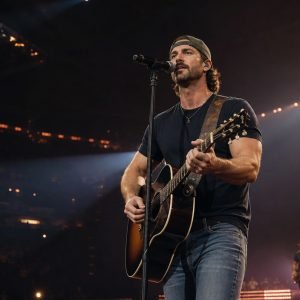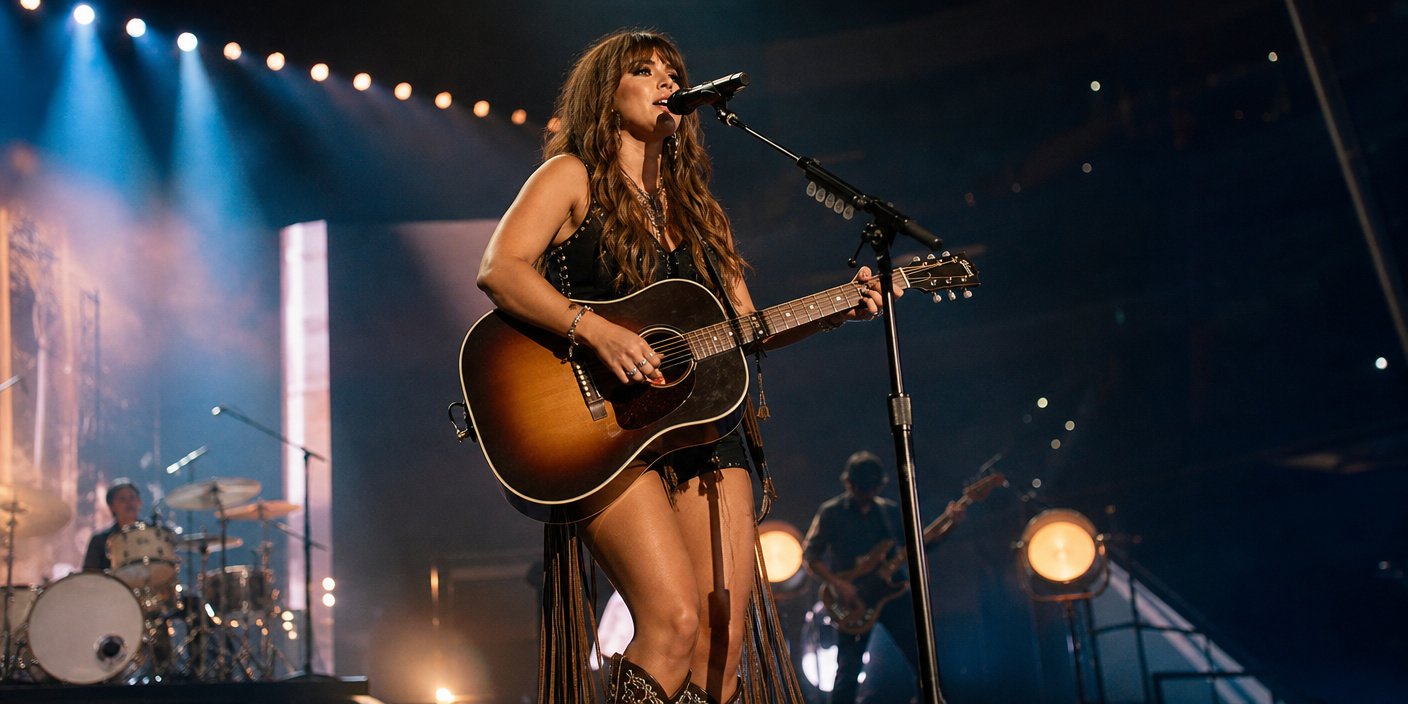
In a historic industry first, country music songs have claimed all top five spots on the Billboard Hot 100 chart, led by Ella Langley and Morgan Wallen. This unprecedented achievement, confirmed by the Billboard chart dated August 31, 2024, signals a seismic shift in the musical landscape, proving that country music has transcended its regional roots to become the dominant sound of mainstream American pop culture.
Key Highlights
- The chart week ending August 31, 2024, marked the first time in the 66-year history of the Billboard Hot 100 that a single genre occupied the top five positions.
- Shaboozey’s viral hit “A Bar Song (Tipsy)” maintained the No. 1 position, anchoring a historic sweep for the genre.
- The feat was powered by a diverse array of sounds, ranging from traditional country tropes to modern, genre-blending collaborations involving Morgan Wallen, Post Malone, Luke Combs, and Ella Langley.
- This event underscores a broader trend of streaming dominance and social media-driven listenership, which has successfully bridged the gap between Nashville’s industry hub and global pop audiences.
The New Nashville Narrative: A Genre Revolution
The dominance of country music on the Billboard Hot 100 is not merely a statistical anomaly; it is the culmination of years of evolution in the music industry. For decades, country music was siloed in its own radio format, often struggling to penetrate the pop-heavy upper echelons of the mainstream charts. That barrier has been completely dismantled. The current chart landscape reflects a “genre-fluid” reality, where listeners on Spotify, Apple Music, and TikTok move seamlessly between country, hip-hop, and pop without the friction that defined the industry in the 1990s or early 2000s.
The Mechanics of the Sweep
The historic top five list for the week of August 31, 2024, consisted of:
1. “A Bar Song (Tipsy)” by Shaboozey
2. “I Had Some Help” by Post Malone feat. Morgan Wallen
3. “Miles on It” by Marshmello & Kane Brown
4. “Ain’t No Love in Oklahoma” by Luke Combs
5. “You Look Like You Love Me” by Ella Langley feat. Riley Green
This composition represents the new face of country: it is inclusive, tech-savvy, and heavily reliant on high-production collaborations. The inclusion of Ella Langley, for instance, highlights how emerging artists are leveraging social media virality to crash the charts alongside established titans like Morgan Wallen and Luke Combs. This methodology—pairing rising talent with seasoned superstars—has become the gold standard for breaking into the upper reaches of the charts.
Historical Context and Evolution
To understand why this is a revolutionary moment, one must look at the history of the Billboard Hot 100. Historically, the chart was dominated by R&B, Pop, and Rock. While country artists would occasionally score a crossover hit, the idea of an entire top five being comprised of country songs was once considered mathematically impossible due to the diversity of listening habits. The transition to a streaming-first model, however, has favored genres with deeply engaged, repetitive fanbases. Country music fans, known for their high loyalty, have effectively “gamed” the streaming economy, turning their genre-specific listening habits into a powerful force that dictates global trends.
Social Media as the Modern Radio
TikTok has undoubtedly played the role of the modern-day gatekeeper. Songs like “A Bar Song (Tipsy)” did not find success solely through traditional radio airplay; they thrived through viral challenges, user-generated content, and aggressive algorithmic exposure. When a song becomes a trend, it bypasses the traditional filters of label A&R and radio station program directors. This democratization of the charts has allowed country artists, who were previously ignored by urban-centric media centers like Los Angeles and New York, to reach listeners in every demographic and geography. The “Nashville Sound” has effectively become the “Global Sound.”
Economic and Cultural Implications
The economic impact of this shift cannot be overstated. Nashville, Tennessee, is experiencing a renaissance, with record-breaking investment in recording infrastructure, songwriting collectives, and talent management. The city is no longer just a destination for country purists; it has become a central hub for the American music industry, drawing producers and songwriters from across the pop and hip-hop worlds to collaborate on projects that, until recently, would have been deemed “too country” for mainstream success.
Furthermore, this shift creates a ripple effect in touring. With country songs dominating the charts, ticket sales for country festivals and headlining arena tours have reached all-time highs. The barrier to entry for a nationwide tour has lowered, as artists can prove their viability through their chart positions rather than relying on decades of radio tenure. This creates a sustainable, self-reinforcing loop: chart success leads to viral fame, which leads to sold-out arenas, which leads to even higher chart placement for the next single.
Looking toward the future, industry analysts predict that this is not a temporary bubble but a permanent realignment of market power. While pop music will always have its place, the raw, narrative-driven nature of country music has proven to be what modern audiences are craving in an increasingly chaotic, digitised world. Artists like Ella Langley represent the vanguard of this new era—young, authentic, and unafraid to blend country aesthetics with modern pop sensibilities.
FAQ: People Also Ask
1. What does this historic top five ranking mean for other genres?
It indicates a decline in the gatekeeping power of pop and R&B, forcing labels to reconsider their marketing strategies. To compete, other genres are now increasingly adopting “cross-genre” collaborative models that were once exclusive to the country industry.
2. Is this just a Morgan Wallen effect?
While Morgan Wallen is a massive factor, he is only one piece of the puzzle. The success of artists like Shaboozey and Ella Langley proves that the audience appetite for country extends far beyond any single artist’s brand.
3. Will country music continue to dominate the Billboard Hot 100?
Market trends suggest that the current listening habits—heavily skewed toward country-pop crossovers—will likely persist in the short term, though chart positions are always subject to rapid shifts in consumer attention and seasonal music releases.
4. Why is the Billboard Hot 100 considered the ultimate metric for success?
It remains the industry standard because it aggregates radio airplay, streaming data (both audio and video), and sales, providing a comprehensive picture of what the general public is actually listening to, rather than just what a specific niche prefers.