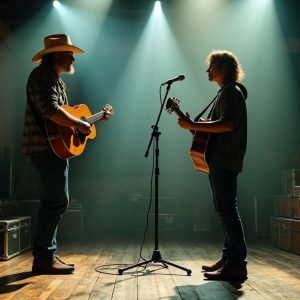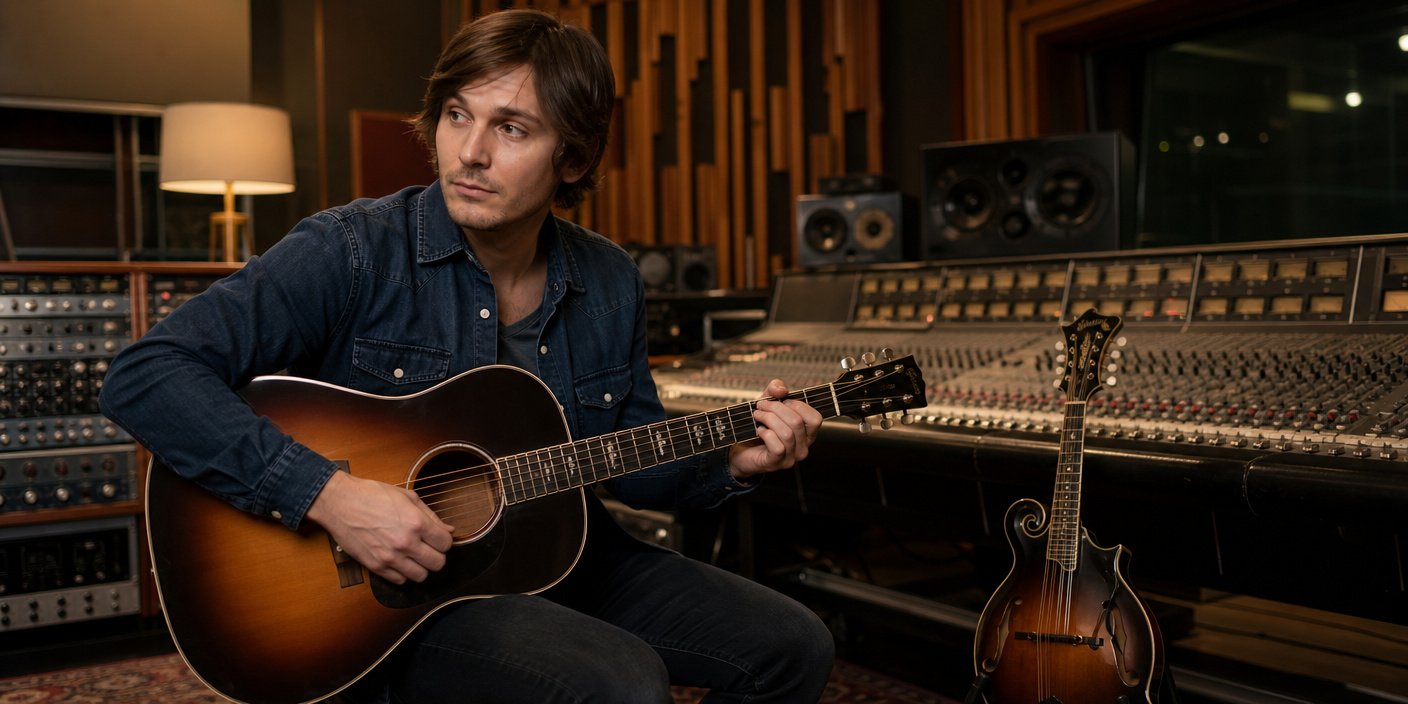
Charlie Worsham is set to redefine his career with the release of ‘Once Upon a Second Time Around’ on August 7, 2026, a project that marks his first independent album and arrives precisely 20 years after his initial arrival in Nashville. This record represents more than just a collection of songs; it is a declaration of artistic autonomy for one of the country music industry’s most respected multi-instrumentalists. By stepping away from the traditional label structure, Worsham is positioning himself at the vanguard of a shift in how legacy-adjacent artists navigate the modern music landscape, ensuring his third decade in the business begins on his own terms.
Key Highlights
- Release Date: ‘Once Upon a Second Time Around’ is officially scheduled for release on August 7, 2026.
- Independent Milestone: This project serves as Worsham’s first release as an independent artist, signaling a major pivot in his business model.
- Two-Decade Journey: The album celebrates a 20-year career arc, marking the exact anniversary of Worsham’s move to Nashville.
- Artistic Autonomy: The record represents a concerted effort to reclaim creative control and define the next chapter of his musical identity.
The Anatomy of an Independent Pivot
The decision to release ‘Once Upon a Second Time Around’ as an independent project is the most significant development in Charlie Worsham’s career since he first gained traction in Nashville. For two decades, the industry has watched Worsham evolve from a talented sideman and session player into a solo artist, songwriter, and ‘musician’s musician.’ In the current era of country music, where digital distribution and direct-to-fan marketing have dismantled the necessity of the ‘Major Label’ gatekeeper, Worsham’s move feels like both a strategic calculation and a creative liberation.
This is not a pivot born of necessity, but one of intent. As an artist who has collaborated with legends such as Vince Gill, Dierks Bentley, and Old Crow Medicine Show, Worsham has spent years soaking up the mechanics of the industry. By choosing to go independent, he is bypassing the traditional A&R processes that often homogenize sound to fit radio formats. This allows for a raw, uncompromising approach to the production of ‘Once Upon a Second Time Around.’ It is a calculated risk that pays homage to the ‘Nashville Sound’ while simultaneously rejecting its rigid commercial expectations.
Twenty Years of Nashville Evolution
The 20-year timeline—spanning from his initial arrival in 2006 to this 2026 release—is central to the album’s thematic depth. When Worsham arrived in Nashville, the industry was arguably in the twilight of the CD era. The market was dominated by monoliths that dictated what country music sounded like. Now, as he releases his latest project, he does so in a streaming-first, TikTok-influenced, algorithm-driven environment.
His longevity in a city known for discarding talent as quickly as it produces it is, in itself, a testament to his versatility. Throughout these two decades, Worsham has maintained a reputation for flawless musicality. He is a virtuoso on the guitar, banjo, and mandolin, skills that have kept him in constant demand. However, this album seeks to shift the focus from his role as a contributor to others’ legacies to the solidification of his own. ‘Once Upon a Second Time Around’ suggests a retrospective gaze—an artist looking back at the boy who arrived two decades ago and filtering those experiences through the seasoned lens of a veteran.
The Economic and Creative Implications
Beyond the melodies and lyrics, this album serves as a case study for the economics of modern country music. By maintaining ownership of his masters, Worsham is tapping into the ‘Creator Economy’ model that has empowered independent artists to keep a larger percentage of their revenue. In the traditional Nashville model, royalty splits often favored labels and publishers heavily, leaving the songwriter with a smaller slice of the pie.
For a songwriter of Worsham’s caliber, the ability to control the licensing, synchronization opportunities, and touring revenue generated by an independent release is substantial. Economically, this is the most secure path forward. Creatively, it allows him to experiment with pacing, genre-blending, and song length—factors that are often sanitized by labels concerned with playlist placement. This is the ultimate ‘musician’s musician’ move: prioritizing the integrity of the work over the reach of the machine.
The Thematic Weight of ‘Second Time Around’
The title ‘Once Upon a Second Time Around’ is deeply symbolic. It implies a narrative arc of renewal. In literary and musical terms, a ‘second time around’ suggests that the initial attempt—the first 20 years—was the learning phase, the trials, and the preparation. This new record is the application of that wisdom. It implies that Worsham is no longer ‘paying his dues’ in the way a young artist does; he is now investing in his own legacy.
This thematic approach creates a unique marketing angle. It invites listeners to view his entire catalog not as a series of disconnected projects, but as a long-form story that has finally reached its moment of self-actualization. For fans who have followed his journey from his earliest days in Nashville to his current standing, this album provides a sense of closure and a new beginning. It is an invitation to witness an artist who has finally found the freedom to say exactly what he wants, exactly how he wants to say it.
FAQ: People Also Ask
Q: When is the official release date for Charlie Worsham’s new album?
A: ‘Once Upon a Second Time Around’ is scheduled for a worldwide release on August 7, 2026.
Q: Why is this album considered a ‘defining moment’ in his career?
A: It is his first independent album, marking a significant transition from traditional label structures to full creative and economic autonomy after 20 years in Nashville.
Q: Does the album title reflect a specific theme?
A: Yes, the title ‘Once Upon a Second Time Around’ symbolizes a period of renewal, artistic maturation, and a reclamation of his musical narrative after two decades in the music industry.
Q: How has the Nashville music scene changed since Worsham arrived 20 years ago?
A: The industry has shifted from a label-dominated, radio-focused model to a digital-first, artist-centric landscape, allowing artists like Worsham to successfully pursue independent distribution paths that were previously inaccessible.