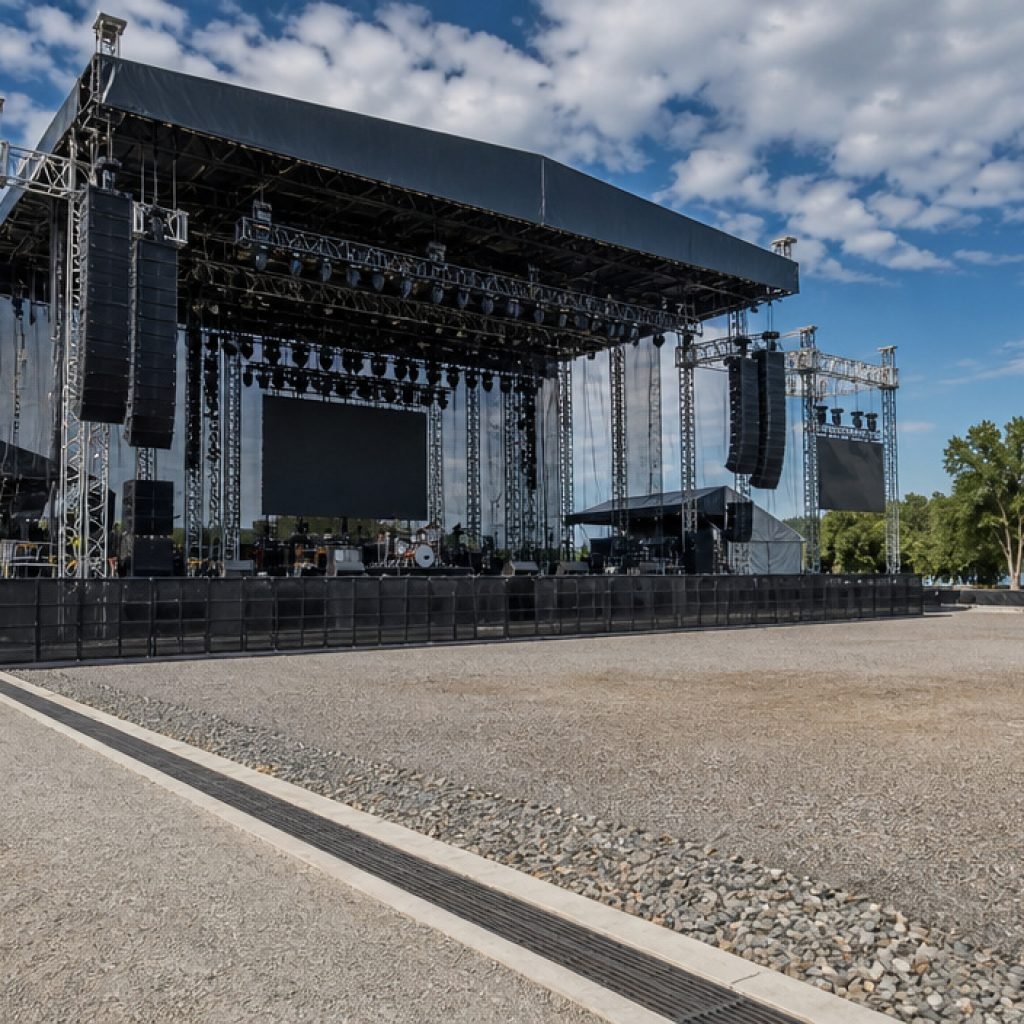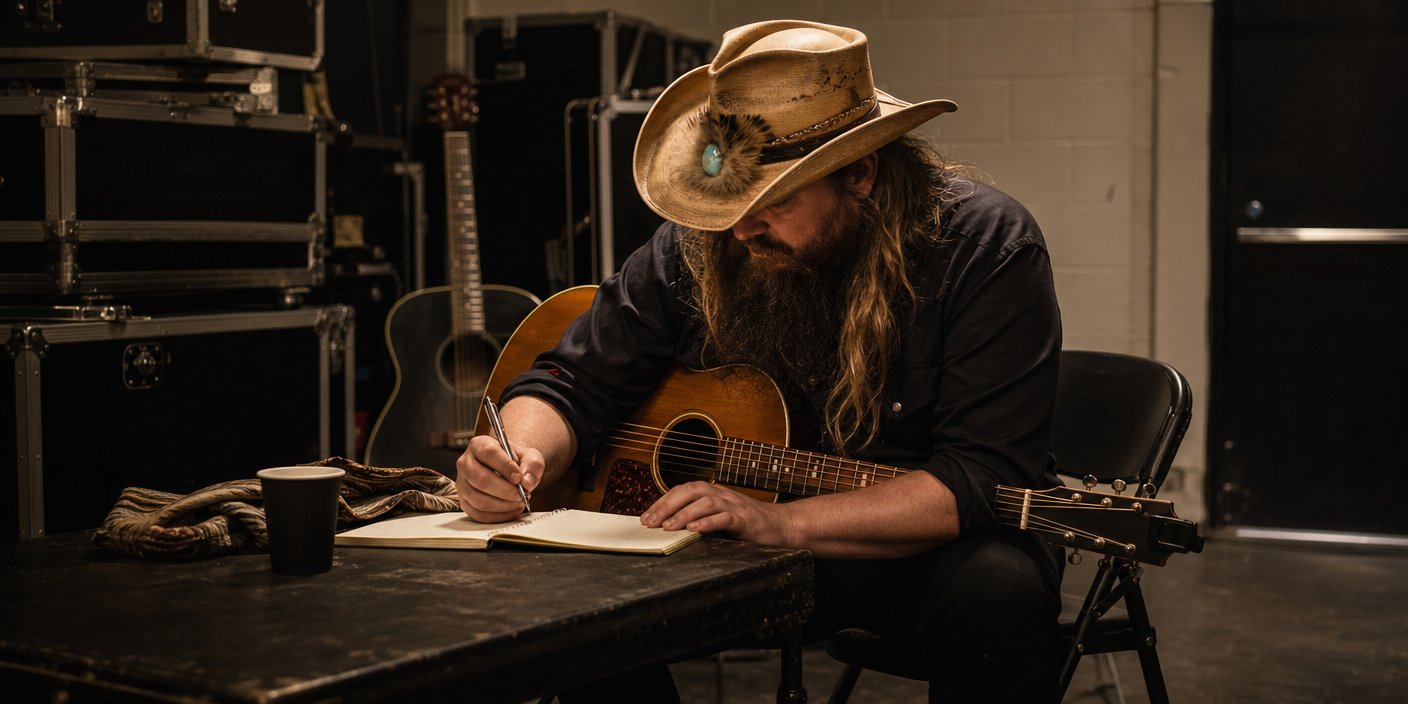
As the skies opened over Paycor Stadium in Cincinnati on July 13, 2024, the atmosphere within the venue shifted from high-octane anticipation to a damp, uneasy uncertainty. For the thousands of fans gathered for Chris Stapleton’s ‘All-American Road Show,’ the severe weather warning necessitated a two-hour delay, halting the momentum of what was expected to be a career-defining performance. Yet, in the quiet, sequestered reality of the backstage area, that time wasn’t spent resting—it was spent crafting. In a display of raw, unfiltered artistic process, Chris Stapleton utilized the impromptu downtime to write a completely new song, eventually debuting the track for the wet but invigorated Cincinnati crowd minutes after completing it.
Key Highlights
- Spontaneous Creation: Chris Stapleton wrote a brand-new, original song during a two-hour rain delay while waiting backstage at Paycor Stadium.
- Immediate Debut: The artist performed the freshly penned composition for the live audience almost immediately after finishing the lyrics and structure, showcasing a rare level of improvisational confidence.
- Atmospheric Resilience: The performance served as a testament to the artist-fan connection, turning a logistical frustration—the weather delay—into a memorable, exclusive experience for attendees.
- Touring Dynamics: The event highlights the operational pressures of massive stadium tours, where strict weather protocols often clash with the need for artist-audience connectivity.
The Anatomy of a Rain-Delay Miracle
In the professional touring industry, weather delays are typically viewed as administrative headaches. They involve complex re-negotiations with venue management, strict curfew enforcement, and the logistical nightmare of maintaining a technical crew during downtime. However, for a musician of Chris Stapleton’s caliber, these pockets of enforced silence can offer a unique, almost monastic opportunity for creativity. The events of that July evening in Cincinnati were not merely a concert recovery effort; they were a fascinating glimpse into the songwriting engine that has propelled Stapleton to the forefront of modern country music.
From Dressing Room to Stadium Stage
Writing a song is rarely a linear process, particularly under the high-pressure environment of a sold-out stadium tour. Usually, the development of a track involves weeks of studio time, revisions, and meticulous polishing. Stapleton’s ability to bypass this conventional timeline speaks to his mastery of traditional songwriting structures. By utilizing the dressing room as an ad-hoc studio, he managed to distill the prevailing mood of the evening—the tension, the rain, the anticipation—into a cohesive narrative. When he eventually stepped onto the stage, the transition from the private, isolated process of songwriting to the public, amplified delivery in front of tens of thousands was seamless, a feat that requires both supreme technical confidence and emotional transparency.
The Psychology of Spontaneous Performance
There is a profound psychological benefit to spontaneity in live music. In an era where production value is often digitized, perfectly rehearsed, and highly choreographed, a raw, ‘just-written’ performance bridges the gap between performer and spectator. Fans at Paycor Stadium were not just witnessing a show; they were participants in a moment of creative genesis. This specific incident underscores a recurring theme in Stapleton’s career: the rejection of artifice in favor of genuine, grit-filled storytelling. By performing the song minutes after completion, he bypassed the ‘polishing’ phase that can sometimes sanitize the soul out of a record, offering the audience a version of the song that was, quite literally, still vibrating with the energy of its birth.
Operational Realities of Weather-Delayed Tours
Beyond the artistry, the Cincinnati show serves as a case study in modern tour management. Stadiums like Paycor are massive, exposed environments where weather safety protocols are rigid. When a storm forces a two-hour delay, the risk of show cancellation is high, leading to significant financial and reputational pressure. Stapleton’s choice to engage his fans with a new song rather than simply retreating to a tour bus underscores a leadership style often overlooked in pop culture discussions. He managed the mood of the crowd, keeping the energy focused on the music rather than the frustration of the elements. This proactive engagement is a critical component of sustaining a long-term touring career, demonstrating that even amidst a thunderstorm, the artist remains the focal point of the fan experience.
FAQ: People Also Ask
Did the concert get cancelled due to the rain?
No, the concert proceeded. While there was a two-hour rain delay caused by a severe thunderstorm, the event continued once the weather cleared, allowing Chris Stapleton to perform his full set, including the surprise debut of the new song.
Is the new song recorded and available to stream?
As of the immediate aftermath of the Cincinnati performance, the song was a spontaneous live debut. Fans and industry observers are waiting to see if Stapleton will enter a studio to record a polished version for a future release.
How often do artists write songs during tour delays?
While many artists write on the road, writing and performing a song within the span of a single rain delay is exceptionally rare. It requires a specific creative discipline and the confidence to perform unfinished or newly finished material in front of a massive audience.
What makes Paycor Stadium unique for weather delays?
Paycor Stadium, home to the Cincinnati Bengals, is an open-air venue. This makes it susceptible to weather disruptions that would not affect indoor arenas. The logistical challenge of clearing such a large venue during a storm is significant, which makes the successful continuation of the concert even more notable.