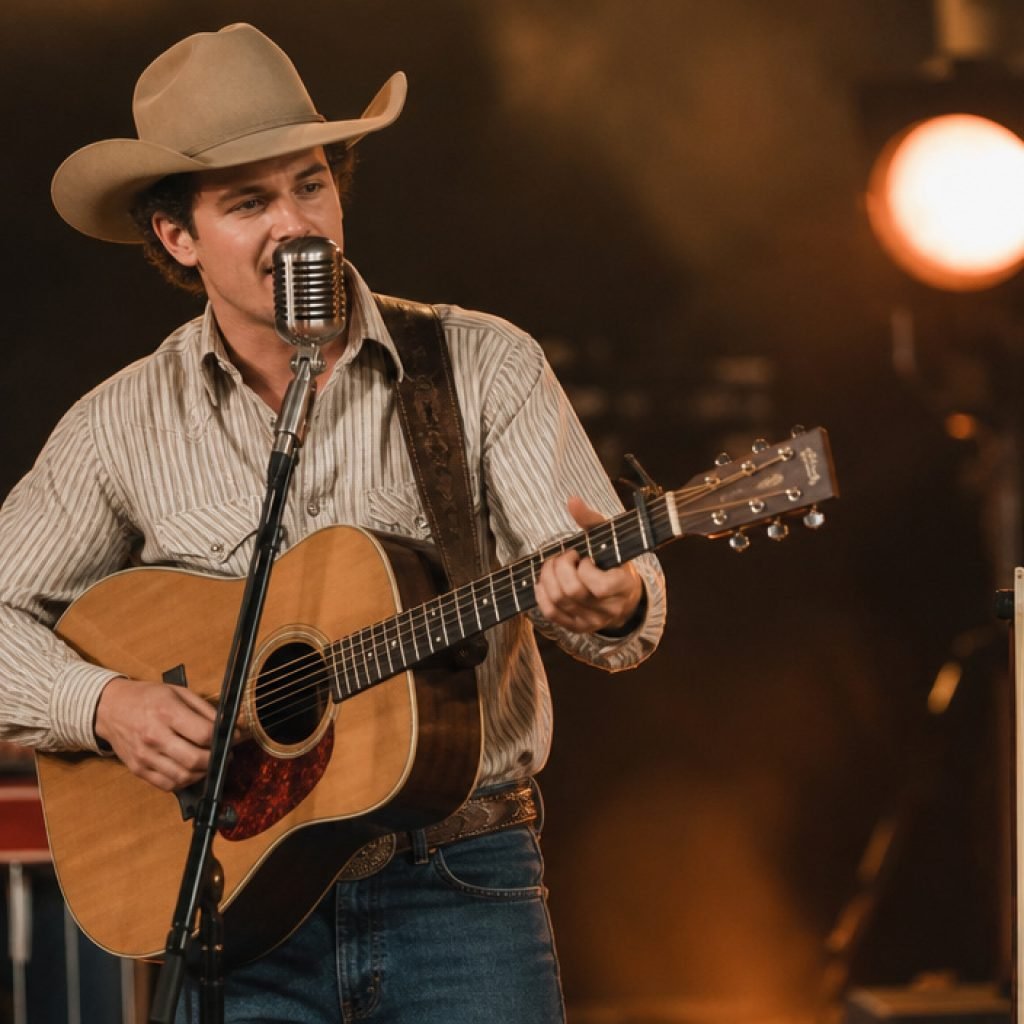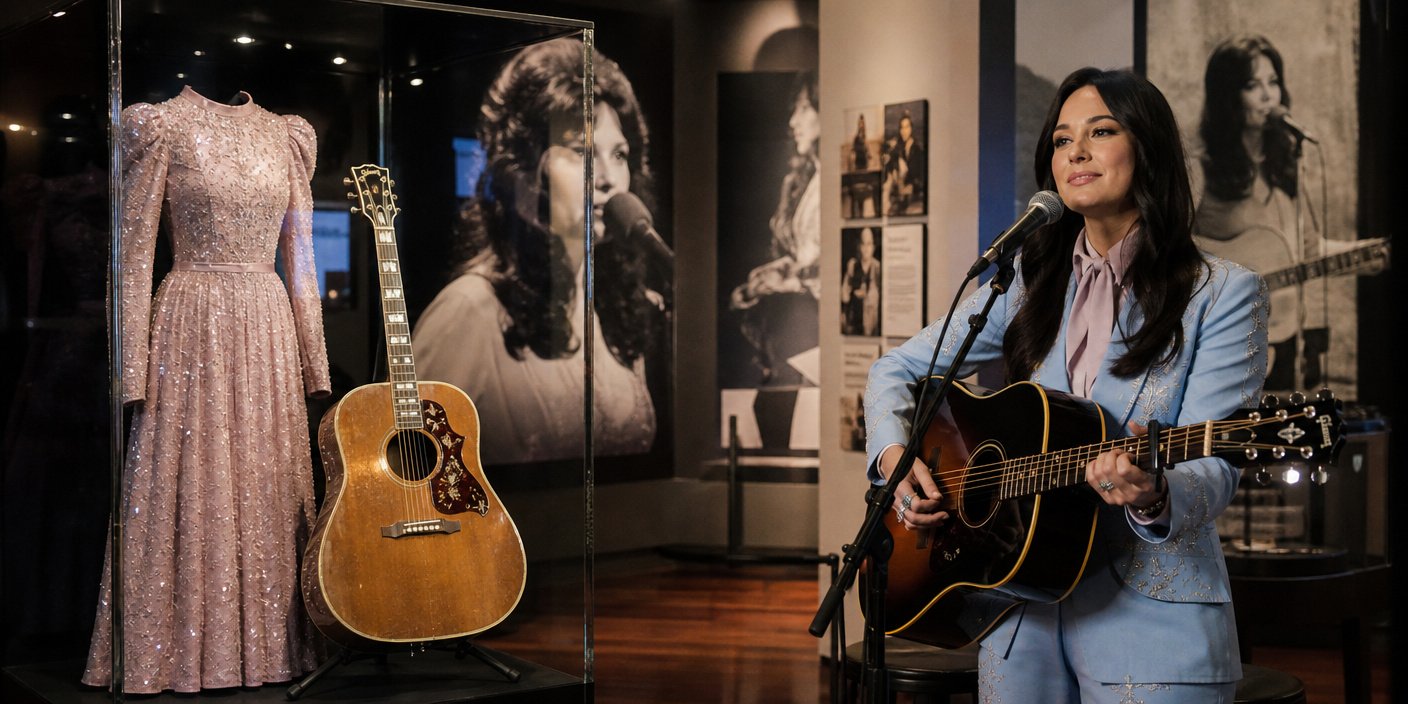
The Country Music Hall of Fame and Museum has officially opened its highly anticipated, deeply personal exhibition dedicated to the life and enduring career of the late, legendary Loretta Lynn. Unveiled on August 22, 2026, the installation serves as a comprehensive time capsule of Lynn’s journey from the hollers of Butcher Hollow, Kentucky, to the pinnacle of international stardom. The opening event, a somber yet celebratory affair, featured a poignant performance by modern country star Kacey Musgraves, whose own career has been profoundly shaped by Lynn’s trailblazing spirit and candid songwriting. This exhibit not only honors Lynn’s historical contributions but acts as a cultural touchstone for a new generation of fans, cementing her status as one of the most influential figures in the history of country music.
Key Highlights
- Grand Opening: The exhibition officially opened its doors to the public on August 22, 2026, at the Country Music Hall of Fame and Museum in Nashville.
- Generational Tribute: The opening ceremony included a moving musical tribute by acclaimed artist Kacey Musgraves, underscoring the influence Lynn continues to exert on modern songwriters.
- Curated Artifacts: The collection features never-before-seen personal items, including handwritten lyric manuscripts, iconic performance gowns, and instruments from Lynn’s personal collection.
- Historical Context: The exhibit frames Lynn’s career within the broader scope of country music’s evolution, highlighting her role in breaking barriers for female artists in the genre.
A Sanctuary of Song: The Curatorial Vision
The new exhibition at the Country Music Hall of Fame is not merely a collection of objects; it is a meticulously crafted narrative of resilience, authenticity, and raw talent. Curators have spent months cataloging items that reflect the dual nature of Loretta Lynn: the public icon who sold millions of records and the private woman who navigated the complexities of motherhood, marriage, and immense pressure with unflinching honesty.
The Architecture of Authenticity
The layout of the exhibit utilizes a chronological flow, beginning with the austere conditions of Butcher Hollow. Visitors are invited to step into a recreation of the environment that shaped her worldview, complete with period-accurate details that provide context for the songs that would later define her career. This grounding in the realities of her upbringing is crucial to understanding her music. It explains why her lyrics resonated so deeply with the working class; she wasn’t singing about their lives as an outsider, but as someone who had lived through every struggle she described. The exhibit space leverages muted lighting and high-definition archival footage to create an immersive atmosphere that balances intimacy with the grandeur of a museum setting.
Artifacts of a Legend
Among the standout pieces in the collection are the original manuscripts for “Coal Miner’s Daughter.” Seeing the handwritten corrections and ink smudges offers a visceral connection to the creative process of a songwriter who never learned to read music. Beside these manuscripts sit the iconic, floor-length, beaded gowns that became her trademark on the Grand Ole Opry stage. These costumes, often handmade in the early days of her career, represent the transition from the humble Kentucky girl to the Queen of Country Music. Instruments, including her well-worn Gibson acoustic guitar, are displayed with a reverence that highlights their role as the primary tools of her trade. Every item has been carefully preserved, with state-of-the-art climate control ensuring that these pieces of cultural history will remain intact for future visitors.
The Bridge to Modern Country
The inclusion of modern artists, specifically Kacey Musgraves, during the opening ceremony highlights the exhibit’s forward-looking intent. Musgraves, who has frequently cited Lynn as her primary influence, delivered an acoustic rendition of “You Ain’t Woman Enough (To Take My Man)” that underscored the timelessness of Lynn’s songwriting. This moment was symbolic of the exhibit’s broader goal: to show that Lynn’s influence is not static. It is a living, breathing component of today’s country music landscape. The exhibit effectively draws a line from Lynn’s 1960s rebellion against traditional country themes to the modern sensibilities of artists like Musgraves, Maren Morris, and Tyler Childers. It argues, quite convincingly, that the current focus on authentic, narrative-driven songwriting in Nashville is a direct descendant of the path Loretta Lynn paved.
Economic and Cultural Impact
Beyond the artistry, the exhibit serves a critical function in the Nashville tourism ecosystem. As the city continues to see record-breaking visitor numbers, the Country Music Hall of Fame and Museum remains the anchor of the downtown district. By dedicating such a significant exhibition to Lynn, the museum is reinforcing the importance of “The Music City” brand. It draws tourists who are looking for a deep-dive experience rather than just the superficial attractions of Broadway. The exhibit is expected to drive substantial traffic to the museum through the remainder of 2026 and well into 2027, as fans from around the world travel to pay their respects and engage with the history of the genre. From an economic standpoint, the installation is a triumph of brand management and cultural preservation.
Looking Toward the Future
The closing sections of the exhibition focus on Lynn’s later years and her continued relevance in the 21st century. This includes her collaborations with Jack White on the critically acclaimed album “Van Lear Rose,” which introduced her to a younger, indie-rock audience. This section of the exhibit serves as a testament to her creative vitality; she never stopped experimenting or pushing the boundaries of what a country singer could be. For those visiting the museum, the takeaway is clear: Loretta Lynn was not a relic of a bygone era. She was a pioneer whose courage, wit, and tenacity set the template for the modern music industry. The exhibit concludes on a note of reverence, leaving the viewer with a profound sense of gratitude for the music she left behind and the doors she kicked open for women in an industry that was often reluctant to welcome them.
FAQ: People Also Ask
Q: Why was Loretta Lynn known as the ‘Coal Miner’s Daughter’?
A: Loretta Lynn was born into a large family in Butcher Hollow, Kentucky, where her father worked in the coal mines. She immortalized her upbringing in her 1970 hit song and later autobiography, both titled “Coal Miner’s Daughter,” which became a defining aspect of her public persona and artistic identity.
Q: What is the significance of the exhibit opening on this specific date?
A: The exhibition opening on August 22, 2026, serves as a major cultural moment for the Country Music Hall of Fame, coinciding with a concerted effort to preserve the legacies of mid-20th-century country legends for a 21st-century audience.
Q: Will the exhibition include items from all periods of her career?
A: Yes, the exhibition is a retrospective that spans her entire career, from her early days in the 1960s and 1970s through her late-career renaissance with albums like “Van Lear Rose,” providing a holistic view of her artistic evolution.