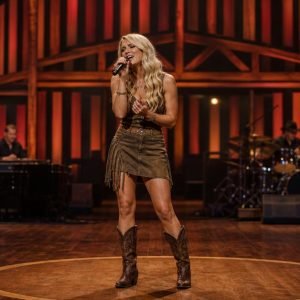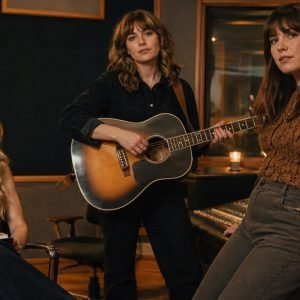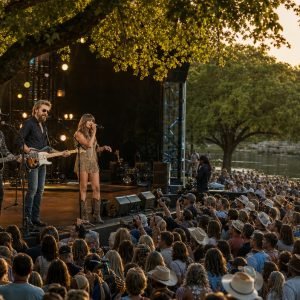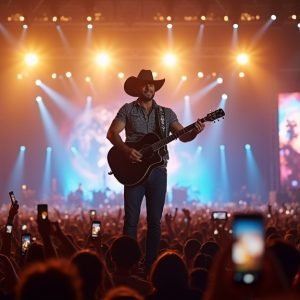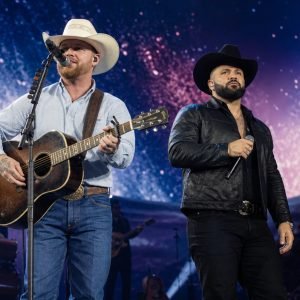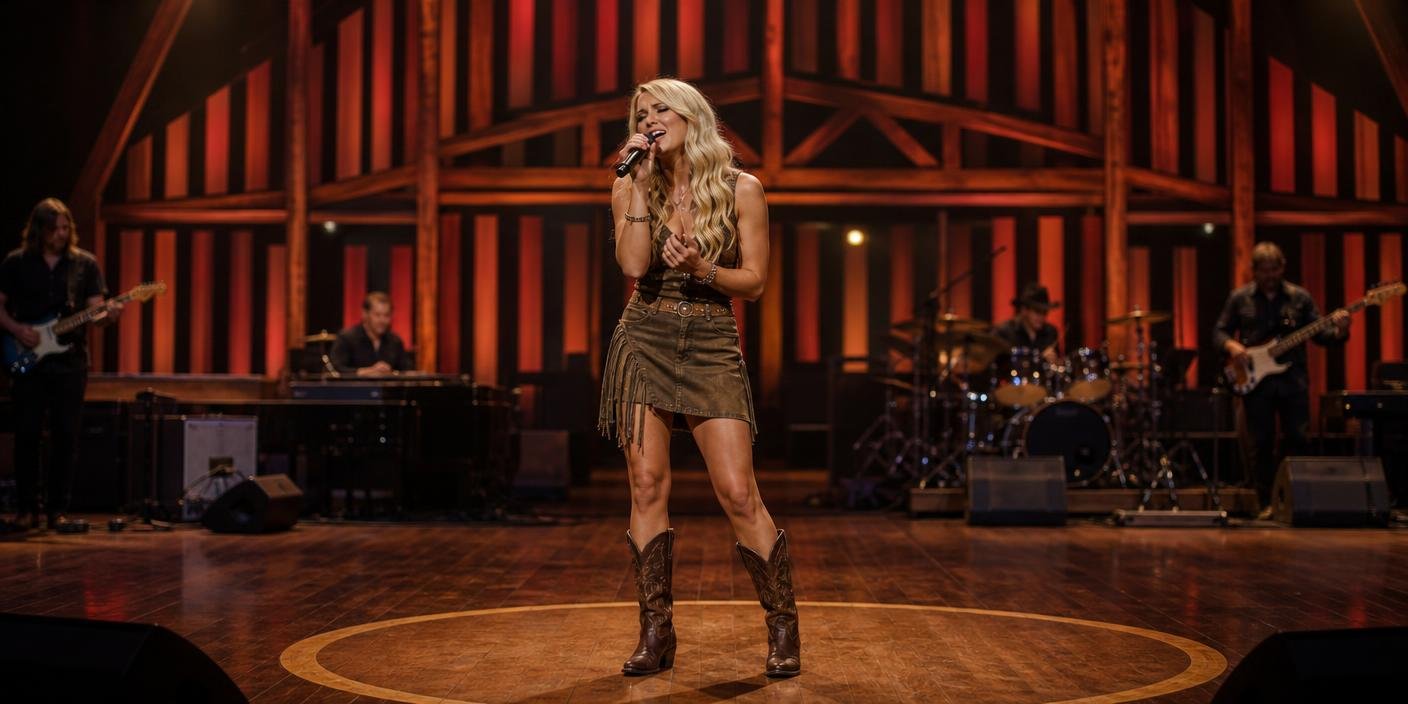
On the night of November 21, 2026, the hallowed stage of the Grand Ole Opry bore witness to a milestone that many artists spend lifetimes chasing, but few achieve with the raw authenticity displayed by Kalsey Kulyk. Stepping into the sacred circle—the very physical center of the Opry stage—Kulyk did more than just perform; she declared her arrival in the upper echelon of modern country music. The atmosphere in the auditorium was palpable, charged with the anticipation that accompanies the debut of an artist who understands the weight of the legacy she is stepping into.
The Sacred Circle: A Milestone in Nashville
For any country music artist, the Grand Ole Opry debut is the ultimate litmus test. It is the moment where the professional industry and the listening public converge to determine if an artist possesses the ‘it’ factor required to sustain a long-term career. Kulyk, who has been building momentum steadily, treated the opportunity not as a casual showcase, but as a career-defining summit. The standing ovation that greeted her at the conclusion of her set was not merely polite applause; it was an acknowledgment from a discerning Opry audience that a new voice had officially claimed its place in the lineage of the genre.
The Emotional Resonance of ‘Little Boy’
The centerpiece of Kulyk’s set was her performance of ‘Little Boy,’ a composition that has quickly become a signature for her burgeoning catalog. In a genre that often prioritizes polished, radio-friendly hooks, Kulyk pivoted toward vulnerability. ‘Little Boy,’ a poignant tribute to the complexities and profound beauty of motherhood, stripped away the artifice often found in modern production. By focusing on the intimate, often unspoken struggles and joys of raising a child, Kulyk connected with the audience on a level that transcended standard entertainment.
Critics have often pointed out that the most enduring country songs are those that function as mirrors for the listener’s own life experiences. ‘Little Boy’ served exactly that purpose. As she delivered the lyrics, the auditorium became deathly silent—a stark contrast to the earlier energy—as the audience leaned into the emotional narrative. It was a masterclass in songwriting, proving that Kulyk’s strength lies in her ability to marry classic country storytelling structures with contemporary emotional honesty.
Mentorship and the ‘Vince Gill’ Effect
Perhaps the most telling detail of the evening was the presence of country music titan Vince Gill backstage. For a rising artist to have the support of a legend like Gill is rare; for that legend to be actively present at a debut is a profound endorsement. Industry insiders note that Gill’s involvement in Kulyk’s circle provides a level of validation that cannot be manufactured through PR campaigns or social media metrics.
Throughout the evening, witnesses reported seeing Gill offering encouragement and counsel, reinforcing the idea that the ‘Nashville way’ of passing the torch remains alive and well. This mentorship dynamic is a secondary angle that cannot be overstated. In an era where the music industry is increasingly fragmented by digital platforms, the endorsement of an establishment veteran like Gill acts as a bridge, grounding Kulyk in the rich history of the Grand Ole Opry while she pushes the genre forward. It suggests that her artistry is not only respected by her peers but is also recognized as essential to the future of the format.
The Future Trajectory: What Comes Next?
With the Opry debut now firmly in the rearview mirror, the question shifts to what this means for Kulyk’s commercial and artistic trajectory. Historically, an Opry debut often catalyzes an acceleration in an artist’s tour billing and radio play. However, for Kulyk, the impact may be more foundational. She has successfully branded herself as an ‘artist’s artist’—someone who values the craft of songwriting above the spectacle of the industry.
As country music continues to grapple with its identity—caught between the allure of pop crossover and the traditionalism of its roots—Kulyk’s position is unique. She is young enough to appeal to the digital generation but traditional enough to satisfy the purists who frequent the Opry. Moving forward, the industry will be watching to see if she can maintain this delicate balance. If her debut performance is any indication, she has the temperament, the songwriting prowess, and the high-level support system to navigate the pressures of country music stardom with grace.
FAQ: People Also Ask
1. Why is the Grand Ole Opry debut so important for country artists?
The Grand Ole Opry is widely considered the ‘home of country music.’ Performing there signifies that an artist has earned the respect of the industry’s elders and the country music community. It is the gold standard for validating a career, often acting as a gateway to broader mainstream recognition and tour success.
2. What is the significance of the song ‘Little Boy’ in Kalsey Kulyk’s career?
‘Little Boy’ is a deeply personal tribute to motherhood. Its inclusion in her Opry debut highlights her shift toward authentic, storytelling-driven songwriting. It has become a crucial track in her repertoire, establishing her as an artist who is willing to be vulnerable and explore mature, relatable themes, setting her apart from peers focusing solely on party anthems.
3. Did Vince Gill’s support impact Kalsey Kulyk’s reputation?
Absolutely. Having a legend like Vince Gill backstage providing support serves as a ‘seal of approval.’ In Nashville, where pedigree and peer respect are paramount, Gill’s mentorship suggests that Kulyk’s music is technically proficient, historically aware, and worthy of the genre’s highest accolades, effectively fast-tracking her credibility with both industry executives and fans.