The Man in Black has found a permanent home in the heart of Music City. Belmont University has entered into a historic agreement to house, preserve, and digitize the extensive personal archives of country music icon Johnny Cash. Provided by his children—most notably John Carter Cash—the collection is being meticulously processed as a cornerstone of the new Johnny Cash Learning Center, situated within the prestigious Mike Curb College of Entertainment & Music Business. This acquisition marks one of the most significant cultural archival transfers in the history of American music, shifting a private history into a public, academic, and accessible institution.
Preserving the Man in Black: The Scope of the Collection
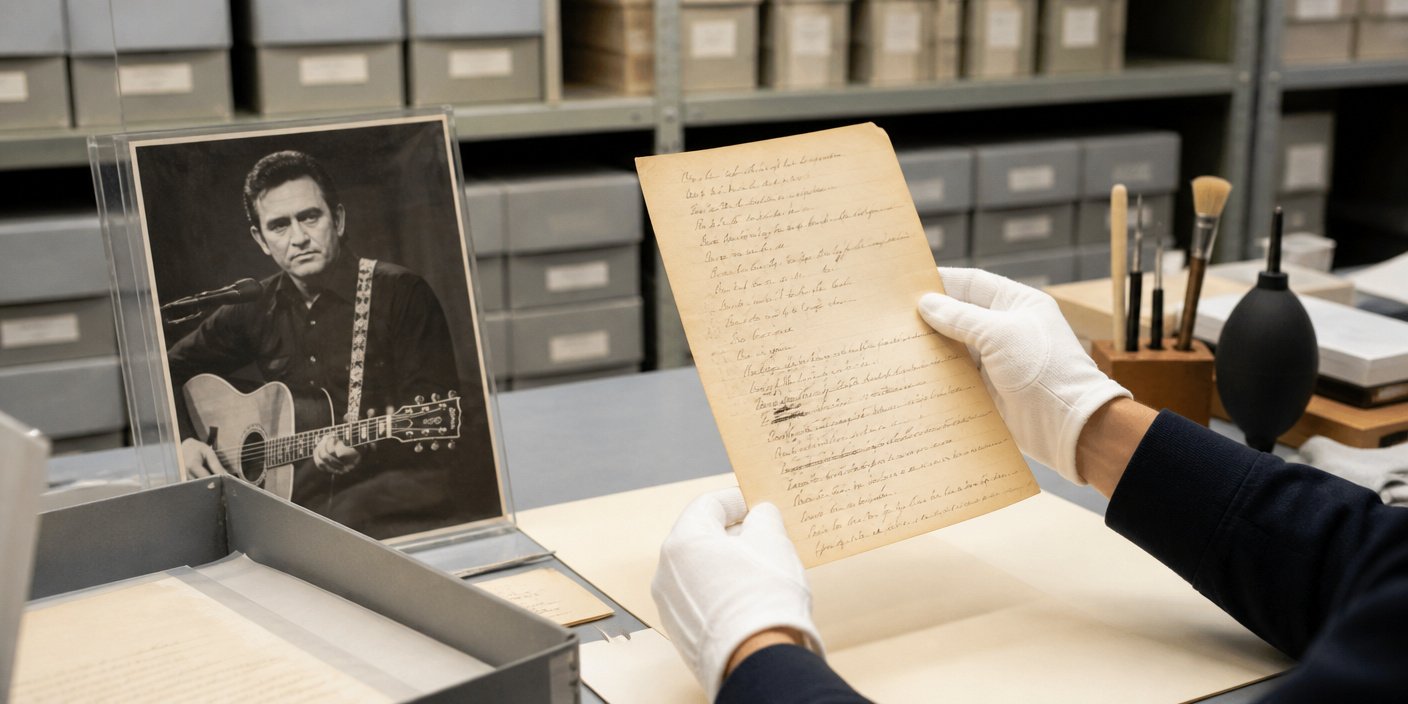
The Johnny Cash archives are not merely a collection of memorabilia; they represent the raw, unvarnished creative process of one of the 20th century’s most influential artists. The repository includes thousands of artifacts that offer an intimate look at Cash’s life, both on and off the stage. Among the items transferred to Belmont are original handwritten song lyrics, personal correspondence with fellow legends, rare photographs, concert posters, stage-worn wardrobe items, and personal awards accumulated over a career that spanned five decades.
For historians and archivists, this collection is a goldmine. The primary goal of the university’s intervention is the long-term preservation of these materials. Many of the documents are aging, and the delicate nature of the handwritten notes requires specialized climate control and advanced digitization protocols. By incorporating these items into a formal learning center, Belmont is ensuring that the physical legacy of Johnny Cash survives for centuries, while simultaneously making his intellectual property searchable and studyable for the next generation of researchers.
Academic Integration at the Mike Curb College
The decision to house the archive within the Mike Curb College of Entertainment & Music Business is deliberate and strategic. Unlike a standard museum exhibit that focuses solely on public display, the integration of these archives into a university setting allows for a unique academic approach. Students enrolled in music business, audio engineering, and songwriting programs gain direct access to the primary documents of an industry icon.
This is a “living” archive. Professors at the Curb College are leveraging the collection to teach courses on music history, copyright law, the evolution of the recording industry, and even the psychology of songwriting. When a student can examine the actual scratchpad where Cash reworked the lyrics to a hit song, the lesson transcends textbooks. It provides a tactile connection to the mechanics of success in the entertainment world, bridging the gap between historical study and practical industry application.
A Legacy Digitized: Accessibility and Impact
Perhaps the most transformative aspect of this acquisition is the commitment to digitization. Through high-resolution scanning and cataloging, Belmont is creating a searchable database that will eventually allow fans, biographers, and academic researchers from around the world to study the archive without needing to physically handle the fragile originals. This move democratizes access to Cash’s legacy, moving it from the private sphere of his estate into the global commons of cultural history.
The project involves complex metadata tagging, allowing users to cross-reference specific tour dates with personal journal entries or financial records. This technological layer of the project serves as a model for how universities can manage large-scale archival data. By turning private papers into a digital dataset, Belmont is pioneering a new way for educational institutions to interact with celebrity estates, setting a precedent that may influence how future music legends approach the disposition of their own life’s work.
The Cultural Significance of the Transfer
Why Belmont? The choice of Nashville—and specifically this institution—speaks to the symbiotic relationship between the city’s academic environment and its cultural identity. Johnny Cash, despite his global fame, was deeply rooted in the storytelling tradition of the American South. Keeping his papers in Nashville, at an institution dedicated to the business of music, preserves the context of his career.
This archive serves as a cornerstone of Nashville’s ongoing effort to formalize the study of country music history. It signals a shift in perception: country music is no longer just a commercial product; it is a subject worthy of serious academic rigor and intense archival preservation. As the university continues to curate this collection, it solidifies Nashville’s status not just as the recording capital of the world, but as the premier global center for musicology and artistic research.
FAQ: People Also Ask
Q: What specific items are included in the Johnny Cash archives?
A: The collection is vast, featuring tens of thousands of items including original handwritten lyrics, personal letters to family and colleagues, photographs from his tours, stage wardrobe, personal journals, and various awards and records from his extensive career.
Q: Is the collection open to the public?
A: While the archives are primarily a scholarly resource for students and researchers, the university has made provisions for exhibitions and access through the Johnny Cash Learning Center, ensuring that the legacy remains accessible in educational and exhibition capacities.
Q: How does this help Belmont students?
A: Students in the Mike Curb College of Entertainment & Music Business use the archives for hands-on research. They gain real-world experience in archival science, cultural history, and the evolution of the music industry by studying the primary documents of a global icon.
Q: Why was Belmont University chosen to house these archives?
A: The Cash estate sought a partner that offered the technical facilities to properly preserve the collection and the academic environment to foster ongoing research, making Belmont’s specialized music and business programs the ideal long-term home.