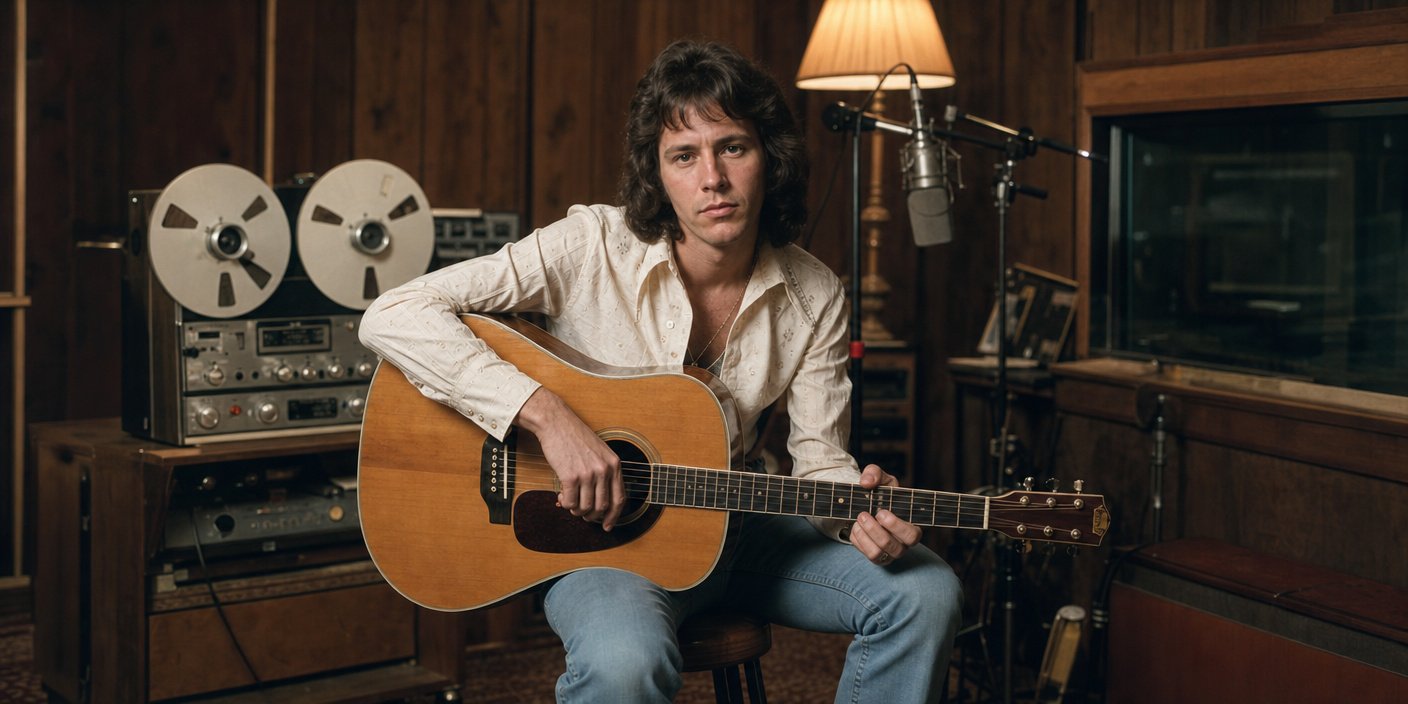
The late, great Gary Stewart, often heralded as the ‘King of Honky Tonk,’ has suddenly cast a long shadow over the modern country landscape with the archival release of ‘One Track Mind.’ This definitive collection gathers 16 previously unheard recordings captured between 1967 and 1972, providing a critical missing link between his early, often misunderstood, formative years and his eventual explosion into the Outlaw Country stratosphere. By pulling these masters from the vaults, the release forces a re-evaluation of Stewart’s evolution as a songwriter and performer during a period when the genre was undergoing a tectonic shift between the polished Nashville Sound and the emerging California-influenced grit.
Key Highlights
- 16 Rare Recordings: The album features 16 tracks that have never before seen a wide commercial release, captured specifically between 1967 and 1972.
- Crucial Historical Context: These sessions predate his breakthrough hits, capturing the raw, unrefined sound of an artist searching for his distinct honky-tonk identity.
- The ‘One Track Mind’ Legacy: The collection highlights the ‘California Years’ of Stewart, exploring the intersection of rock-and-roll sensibilities and traditional country structures.
- Industry Impact: This release sets a new standard for archival preservation, demonstrating the value of deep-cut discovery in a streaming-dominated industry.
Unearthing the King of Honky Tonk
The mystique surrounding Gary Stewart has only grown since his passing, but ‘One Track Mind’ serves as more than just a nostalgic curiosity; it is a clinical dissection of a genius in the making. During the years 1967 to 1972, the landscape of country music was in flux. Stewart, navigating the waters between the established Nashville establishment and the encroaching influence of the West Coast ‘Bakersfield’ sound, was effectively the bridge that connected these two worlds.
The California Crucible
Unlike many of his contemporaries who were firmly entrenched in the Nashville machine, these archival recordings reveal a Stewart who was deeply influenced by the burgeoning rock culture of the late 60s. The tracks showcase a tighter, punchier arrangement style than what became the hallmark of his RCA years. There is a distinct, hungry energy in these performances—the sound of an artist who hadn’t yet achieved the fame that would eventually lead to his trademark ‘Outlaw’ angst, but possessed the raw, unfiltered emotional delivery that would define the rest of his career.
Analyzing the Sonic Shift
Critics and historians often point to Stewart’s ‘Outlaw’ peak in the mid-70s as the arrival of his true self. However, ‘One Track Mind’ argues that his sonic identity was forged in these 16 tracks. The production is sparser, focusing heavily on his phrasing and the sharp, observational songwriting that would become his stock-in-trade. Listening to these tapes is akin to watching a sculptor chip away at marble; the final form isn’t quite there, but the intent—the sheer, visceral need to express heartbreak and the honky-tonk lifestyle—is undeniable and perfectly preserved.
The Economics and Cultural Weight of Archival Releases
There is a broader conversation to be had regarding the current industry trend of ‘vault digging.’ In the age of digital streaming, archival releases like ‘One Track Mind’ serve two distinct purposes: satisfying the dedicated fanbase and providing a historical record for future generations.
The Value of the Unheard
From a market perspective, these 16 tracks are gold. They do not merely occupy space; they provide tangible data for musicologists studying the mid-century transition of country music. By releasing these sessions, the stewards of Stewart’s legacy are allowing for a more nuanced understanding of his ‘Outlaw’ era. It turns out, he wasn’t just reacting to the times in the 70s—he was actively building the foundation for that reaction in the late 60s.
A Blueprint for Legacy Artists
This release stands as a blueprint for how to handle a legacy catalog. Rather than releasing a generic ‘Greatest Hits’ album, which offers nothing new to the cultural discourse, this targeted archival project provides context. It invites the listener to understand the artist as a human being who evolved, failed, practiced, and eventually mastered his craft. It is a lesson that other country music institutions would be wise to study.
Defining the ‘Outlaw’ Narrative
Finally, we must look at how this impacts the ‘Outlaw Country’ mythology. Often, the narrative suggests that artists like Stewart simply appeared, fully formed, to disrupt the Nashville status quo. ‘One Track Mind’ proves this to be a reductive myth. It shows a years-long, arduous climb. The ‘Outlaw’ wasn’t a sudden choice; it was the result of thousands of hours in studios like these, refining a sound that could not be contained by the traditional structures of the day. This collection is a testament to the fact that the ‘Outlaw’ was, above all else, a working man’s artist.
FAQ: People Also Ask
Q: Why are these Gary Stewart recordings being released now?
A: The release aims to fill the historical gap between Stewart’s early career and his mainstream success, providing fans and historians with a more comprehensive look at his creative development during a pivotal period of country music history.
Q: What makes ‘One Track Mind’ different from other Gary Stewart compilations?
A: Unlike typical compilations that focus on radio hits or ‘best of’ tracks, this album is comprised entirely of previously unheard archival recordings from 1967–1972, making it a unique historical document rather than a standard commercial repackaging.
Q: How does this change our understanding of Gary Stewart’s career?
A: It shifts the narrative of Stewart as an ‘instant’ success in the 70s to a more accurate portrait of a seasoned, evolving songwriter who spent years honing his craft, blending traditional honky-tonk with rock influences long before he reached national fame.
Q: Is this release meant for casual listeners or serious fans?
A: While any country music fan will appreciate the quality, the archival nature of the recordings makes this a mandatory release for serious students of country music history and long-time fans of Stewart’s unique ‘King of Honky Tonk’ style.