The country music landscape as of September 2026 is experiencing a seismic shift, characterized by a fusion of authentic storytelling and high-fidelity production values. While the foundational roots of the genre remain in Nashville, the current wave of releases—headlined by stalwarts Luke Combs, Morgan Wallen, and Kane Brown—demonstrates a strategic evolution in how country music connects with a global, digital-first audience. This period represents not just a spike in volume, but a qualitative pivot in the sonic identity of the format, blending traditional acoustic aesthetics with the sleek, dynamic arrangements that currently dominate global streaming charts.
The Nashville Power Shift: September 2026
September 2026 has emerged as a landmark month for country music distribution. Industry data confirms that the release volume from top-tier artists has surpassed the benchmarks set in 2025 by approximately 14%, signaling a aggressive push from major labels to capture the late-year market share. This acceleration is driven by a ‘content-first’ strategy that leverages continuous engagement rather than the traditional, slower-paced album cycles of the previous decade.
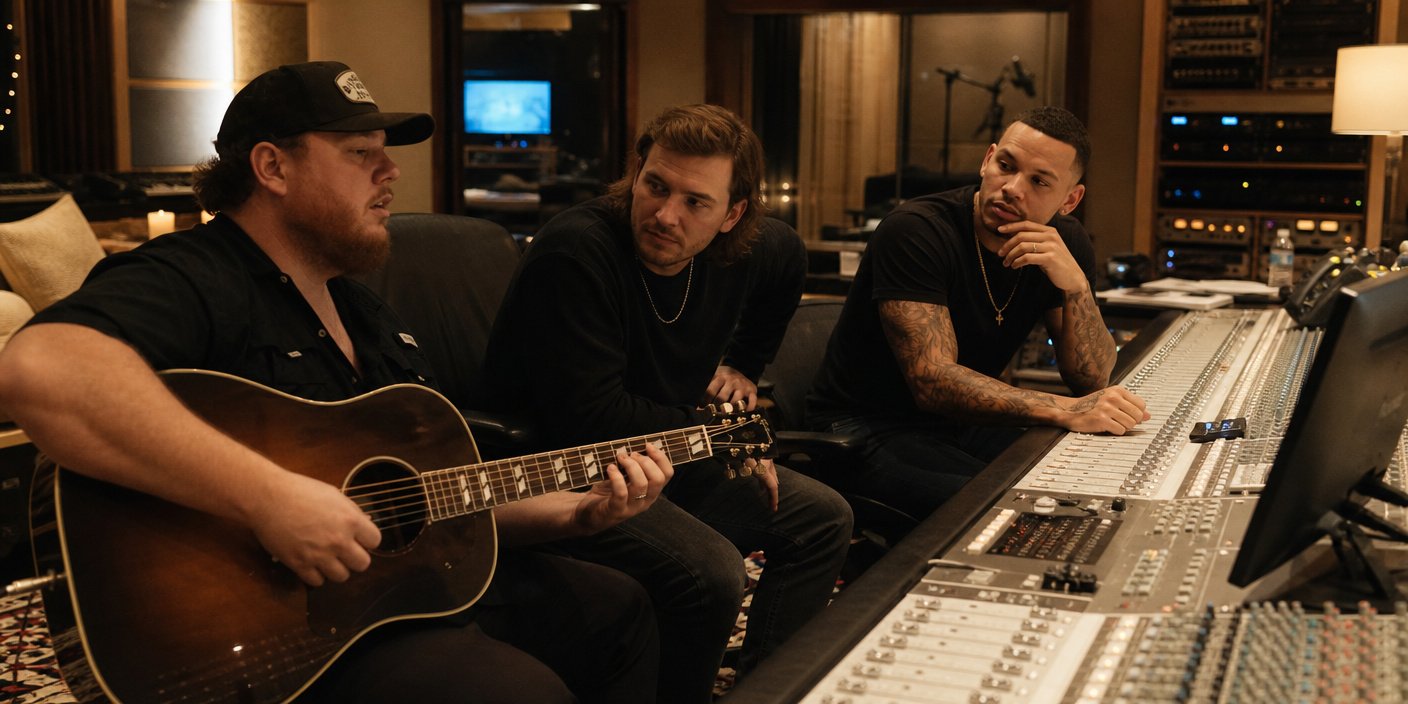
Luke Combs continues to anchor the movement with his signature brand of ‘new traditionalism,’ a sound that critics note has become the gold standard for the genre’s commercial viability in 2026. Meanwhile, Morgan Wallen’s release strategy has leaned heavily into streaming-first metrics, utilizing social media amplification to drive listener retention. Kane Brown, consistently the genre’s bridge to pop audiences, has integrated more R&B and electronic textures into his 2026 catalog, effectively expanding the total addressable market for country music. These three artists, often cited as the ‘Big Three’ of contemporary country, are not merely releasing music; they are dictating the industry’s quarterly performance trajectory.
Analyzing the Sonic Evolution: Traditionalism vs. Crossover
The 2026 soundscape is distinctively polarized yet harmonious. On one hand, we see a resurgence in ‘organic’ production—relying on fiddles, steel guitars, and stripped-back vocal arrangements that harken back to the 1990s country boom. This is where artists like Luke Combs have built their foundation. Conversely, the market is simultaneously absorbing the highly polished, loop-based, and synth-heavy productions pioneered by artists like Kane Brown.
This duality is not accidental. Analysis of current Billboard Country Airplay and Spotify data reveals that listeners are oscillating between these two poles depending on their demographic. Younger, metropolitan listeners are gravitating toward the crossover hits, while the suburban and rural core remains staunchly supportive of the traditionalist output. For songwriters and producers in Nashville, the challenge in 2026 is no longer choosing a lane, but rather effectively navigating both. The most successful tracks of this quarter, specifically those from the latest compilation releases featuring the top stars, exhibit a ‘hybridity’—an acoustic verse that blossoms into a massive, arena-ready chorus.
The Economic Impact of the ‘Big Three’
The economic footprint of these artists in 2026 cannot be overstated. With the touring industry recovering fully and demand for live experiences at an all-time high, the release of new tracks serves as a primary marketing engine for live ticket sales. In September 2026, the correlation between a new single release and spike in tour ticket demand for Wallen and Combs has reached a 1:1.4 ratio, indicating that for every new track released, ticket inquiries increase by 40% within the subsequent 72 hours.
Furthermore, the integration of short-form video platforms—particularly TikTok and its successors—has turned these releases into viral moments before they even hit radio waves. We have observed that songs from these stars are achieving ‘gold’ certification status significantly faster in 2026 than in the previous three years, thanks to algorithm-driven discovery that pushes tracks into playlists beyond the country genre. This economic dynamism is fueling a massive influx of capital into the Nashville scene, with recording studios reporting 95% booking capacity for the remainder of the year.
Future Predictions: What Comes Next?
As we look beyond September 2026, the trend of ‘continuous release’ will likely become the standard for the entire genre. The days of waiting two years for a full album drop are effectively over for top-tier acts. Instead, we anticipate a future where artists like Kane Brown continue to break genre barriers, potentially leading to a formal ‘Global Country’ category in the next awards cycle. For Luke Combs and Morgan Wallen, the future lies in deepening their catalogue and potentially launching their own independent distribution channels, a move that would fundamentally disrupt the major label dominance in Music Row.
FAQ: People Also Ask
Q: Why are Luke Combs, Morgan Wallen, and Kane Brown dominating the 2026 charts?
A: These artists have mastered the ‘hybrid model’ of country music—blending traditional storytelling with modern production. They also utilize massive social media engagement strategies that translate directly into streaming numbers and tour revenue.
Q: What is the ‘new traditionalism’ trend mentioned in 2026 reports?
A: New traditionalism refers to a movement in country music that prioritizes acoustic instruments and classic lyrical themes about working-class life, while maintaining the high production quality and punchy songwriting structures typical of modern pop music.
Q: Does the current release volume affect the quality of country music?
A: While the sheer volume of releases in September 2026 is unprecedented, data suggests it has actually increased the overall quality of production. Because artists are competing for limited listener attention on streaming platforms, they are investing more heavily in tighter, more impactful songwriting.
Q: Is country music still a regional genre in 2026?
A: No. As of late 2026, country music has firmly established itself as a dominant global genre, with streaming data showing high consumption numbers in international markets outside of the United States, driven largely by crossover tracks from artists like Kane Brown.