Alan Jackson, the titan of 90s country music and a standard-bearer for the neo-traditionalist movement, has cemented his commercial legacy with a monumental achievement: 85.5 million certified units sold in the United States. This staggering figure, verified by the Recording Industry Association of America (RIAA), comes on the heels of the conclusion of his career-spanning “Last Call: One More for the Road” tour, which culminated in a sold-out finale at Nashville’s Nissan Stadium. This milestone serves as both a retrospective of a singular artistic journey and a testament to the enduring power of his catalog in the age of streaming.
Key Highlights
- Record-Breaking Numbers: Alan Jackson has now surpassed 85.5 million certified units sold, placing him among the highest-selling artists in country music history.
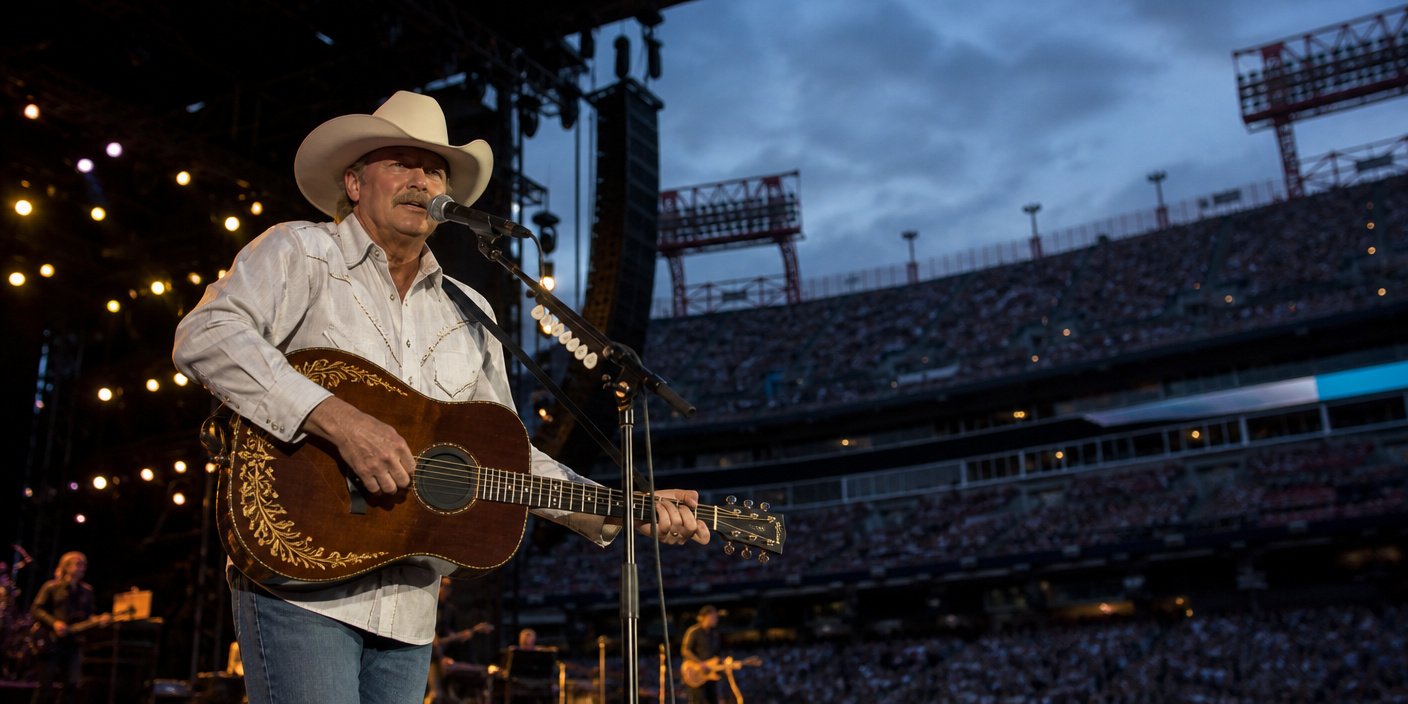
- Tour Finale: The RIAA certification follows the emotional conclusion of his “Last Call: One More for the Road” tour, which wrapped at Nissan Stadium in Nashville.
- Enduring Legacy: Jackson’s commercial success is anchored by a career defined by neo-traditionalist roots, distinguishing his sound from the pop-country crossover trends of his era.
- Catalog Power: The certification reflects sustained consumption through both legacy physical sales and the consistent streaming performance of hits like “Chattahoochee,” “Drive,” and “Where Were You (When the World Stopped Turning).”
The Commercial Weight of a Country Legend
The RIAA certification of 85.5 million units is not merely a number; it is an economic indicator of the sheer scale of Alan Jackson’s influence on the American music landscape. When analyzing this data, industry experts point to the shift in how “units” are calculated. Modern RIAA certifications account for digital streaming equivalents, allowing artists with decades-old catalogs to see their numbers continue to climb as new generations discover their discography on platforms like Spotify and Apple Music.
Jackson’s path to this 85.5 million milestone is unique. While many of his peers pursued rapid sonic evolutions to chase radio formats, Jackson remained steadfast. His commitment to the fiddle-and-steel sound of the 80s and 90s created a “brand safety” for his music that has proven remarkably durable. Unlike artists who suffer from dated production choices, Jackson’s core recordings have aged into “classic” status, resulting in a consistent revenue stream that many contemporary artists fail to replicate.
The Nissan Stadium Sign-Off
The choice of Nissan Stadium for the finale of the “Last Call: One More for the Road” tour was highly symbolic. As the home of the Tennessee Titans and a venue that holds approximately 69,000 spectators, it represents the upper echelon of touring venues. For an artist like Jackson, who has struggled publicly with Charcot-Marie-Tooth disorder, the tour was not just a business endeavor but a physical and emotional commitment to his fanbase.
The tour itself was a masterclass in legacy management. By focusing on his expansive list of number-one hits rather than promoting new, experimental material, Jackson maximized the emotional resonance of the concerts. The Nissan Stadium finale wasn’t just a concert; it was a capstone event that served as the final push required to cross the threshold into the 85.5 million unit bracket.
The Neo-Traditionalist Influence
To understand the magnitude of Jackson’s sales, one must consider his role in the neo-traditionalist movement. Emerging in the late 1980s alongside peers like George Strait and Randy Travis, Jackson became the bridge between the outlaw country era of the 1970s and the commercial explosion of the 1990s.
His ability to write, record, and perform songs that felt authentic to the working-class experience—such as “Little Bitty” or “Midnight in Montgomery”—secured a dedicated listener base that has remained loyal for over three decades. This loyalty is the primary driver behind the 85.5 million figure. While pop-country artists often rely on the “flavor of the week” listener, Jackson built a foundation of generational listeners. This is an essential secondary angle: the longevity of an artist’s career is directly proportional to the authenticity of their narrative, a lesson that modern labels are increasingly trying to re-learn.
Future Predictions and Catalog Management
With the “Last Call” tour concluded, industry analysts are looking at what this means for the future of his catalog. It is highly probable that the RIAA numbers will continue to rise even in the absence of touring.
1. Streaming Monetization: As his catalog is remastered and pushed through algorithmic playlists, the units will continue to tick upward.
2. Sync Licensing: Jackson’s songs are quintessential for film and television placements that require a “classic country” feel, further expanding his reach.
3. Legacy Preservation: Much like the catalogues of Johnny Cash or Merle Haggard, Jackson’s music is transitioning from current hits to “American Standard,” ensuring it remains profitable for Arista Nashville and his estate for decades to come.
Ultimately, the 85.5 million milestone is a confirmation of status. In an industry defined by volatility, Alan Jackson has successfully maintained a trajectory of growth that mirrors the best of his songwriting: steady, relatable, and built to last.
FAQ: People Also Ask
What does the 85.5 million RIAA certification represent?
It represents the total number of albums, singles, and digital tracks sold or streamed, weighted according to the RIAA’s specific data formulas for audio and video streams, physical sales, and downloads in the United States.
Did Alan Jackson retire after his Nissan Stadium concert?
While the “Last Call: One More for the Road” tour was marketed as a major farewell to touring, Jackson has indicated that his health challenges with Charcot-Marie-Tooth disorder are the primary driver for slowing down, though he has not explicitly ruled out potential one-off studio or special event appearances.
Why is the neo-traditionalist movement relevant to his sales?
It is relevant because the movement focused on timeless songwriting and traditional instrumentation (fiddle, pedal steel). This focus avoided the “dated” sound associated with mid-90s pop-country production, making his music more palatable for newer streaming audiences.
How many number-one hits does Alan Jackson have?
Alan Jackson has charted over 35 number-one singles on the Billboard Hot Country Songs chart throughout his illustrious career, contributing significantly to his massive unit sales figures.