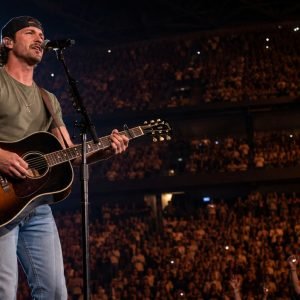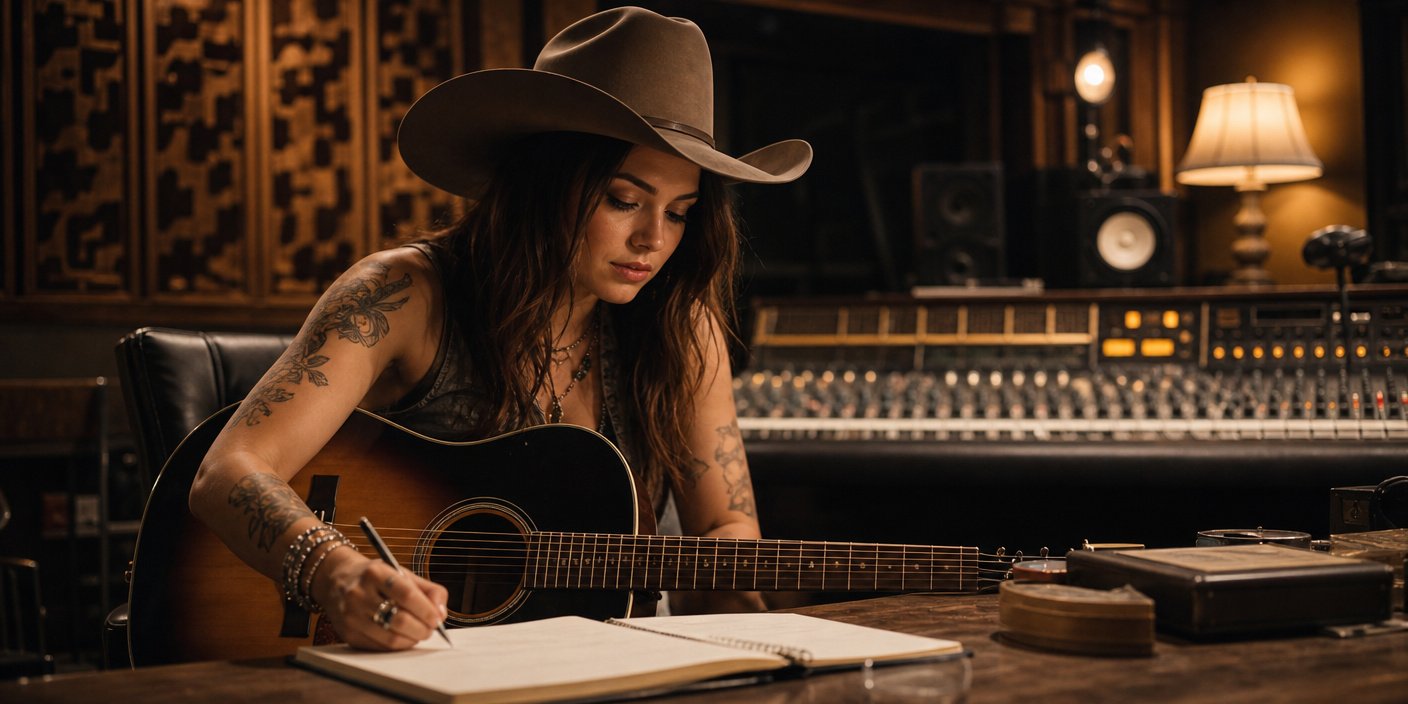
Stella Lefty has officially rewritten the history books of modern country music. Her breakout single, “Boston,” has ascended to the No. 1 spot on the country radio charts this week, securing the title of the fastest chart debut by a solo female artist in over two decades. The track, which has been ubiquitous across terrestrial radio and streaming platforms alike, signals a seismic shift in the genre’s landscape and establishes Lefty as the most significant new voice to emerge from Nashville in years.
Key Highlights
- Record-Breaking Ascent: “Boston” hit the No. 1 spot faster than any other single by a solo female artist since the early 2000s.
- Radio Dominance: The track has achieved near-universal support across country radio stations, overcoming traditional airplay hurdles for female artists.
- Genre Evolution: Industry experts credit Lefty’s distinct blend of authentic, narrative-driven storytelling and polished, crossover-ready production for the song’s rapid climb.
The New Standard: Why ‘Boston’ Resonated
The ascent of “Boston” is not merely a statistical anomaly; it is a cultural moment. To understand why this song has permeated the airwaves with such ferocity, one must look at the structural components of the track. In an era where country radio has often been criticized for prioritizing a homogenous “bro-country” sound or safe, mid-tempo ballads, Lefty’s “Boston” arrived with a sharp, evocative narrative that cut through the noise.
The Anatomy of a Hit
The song itself is a masterclass in modern country production. Utilizing a sparse, acoustic-heavy intro that slowly builds into a stadium-sized anthem, the track mirrors the emotional arc of the lyrics—a story about leaving one’s roots to find a new identity in the city. By the time the chorus hits, the production utilizes a multi-layered vocal technique that pays homage to 90s country icons while remaining firmly rooted in contemporary sensibilities. This “old-meets-new” approach has allowed Lefty to capture a cross-generational audience, drawing in both traditional country radio listeners and younger fans migrating from streaming platforms.
The 20-Year Barrier
For over two decades, the Billboard Country Airplay and Mediabase charts have been notoriously difficult for solo female artists to penetrate at speed. Historically, female artists have had to fight an uphill battle for “add” dates at radio stations, often needing a long runway to build momentum. Lefty’s achievement in breaking this cycle suggests a potential thawing of these industry dynamics. By hitting the top spot in record time, she has effectively challenged the gatekeepers of the genre, proving that listener demand can—and will—outpace traditional industry programming strategies.
The Shift in the Nashville Machine
Nashville, the epicenter of the country music industry, is taking notice. The success of “Boston” is causing a re-evaluation of how labels and radio consultants approach debut singles for female artists. Historically, there has been a risk-averse culture where new artists were expected to build a slow, steady foundation. Lefty’s path, characterized by an explosive, nearly vertical trajectory, provides a new blueprint for success.
Streaming vs. Terrestrial Radio
One of the most fascinating aspects of this rise is how it bridges the gap between streaming metrics and terrestrial radio. Usually, there is a divergence: a song might explode on Spotify or Apple Music, only to struggle to find a home on the radio. “Boston” managed to bypass this friction. Its virality on social media platforms acted as a catalyst, forcing radio programmers to add the track to playlists earlier than they might have otherwise. This synergy between digital consumption and radio airplay is the new gold standard for country music success.
The ‘Lefty’ Effect on Future Programming
We are likely to see a shift in the coming months where labels prioritize songs with similar “immediate hook” capabilities. If Lefty’s success holds, it will pressure radio conglomerates to diversify their artist rosters further, moving away from the gender-skewed trends that have defined the last ten years. This isn’t just a victory for Stella Lefty; it is a victory for the broader pool of female songwriters, musicians, and performers who have been waiting for the industry to align with modern audience tastes.
Predicting the Sophomore Strategy
With such a massive debut, the pressure now shifts to Lefty’s follow-up single. The “sophomore slump” is a real phenomenon, especially for artists whose first release captures lightning in a bottle. The strategy moving forward will be critical. Will she lean into the acoustic vulnerability that made “Boston” a hit, or will she pivot to a more pop-centric sound to cement her crossover appeal? Regardless of the path, the industry will be watching closely, as her next move will define whether she remains a singular hit-maker or evolves into a generational artist.
FAQ: People Also Ask
Q: What is the significance of the 20-year record Stella Lefty broke?
A: For two decades, country radio has shown a structural bias that made it difficult for female solo artists to climb the charts rapidly. Lefty’s feat is significant because it demonstrates that the genre’s gatekeepers are now more responsive to immediate listener demand than ever before, potentially signaling an end to the long-standing “slow-build” requirement for women in country music.
Q: How did “Boston” differ from typical country radio hits?
A: “Boston” utilized a unique production blend of stark, acoustic, storytelling-focused verses and a massive, anthemic, multi-layered chorus. This allowed it to appeal to both traditional listeners who favor narrative lyricism and modern listeners who appreciate the high-fidelity, polished production style common in pop-country crossovers.
Q: Will this impact future signings in Nashville?
A: Likely yes. The success of “Boston” proves that there is a massive, untapped appetite for female-led, narrative-driven country anthems. Labels are already pivoting to scout artists with similar profiles, expecting a shift in radio programming that favors this type of high-energy, relatable songwriting.