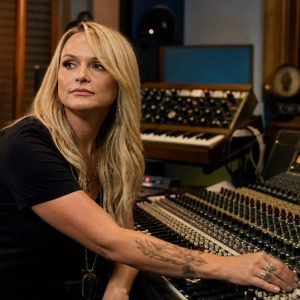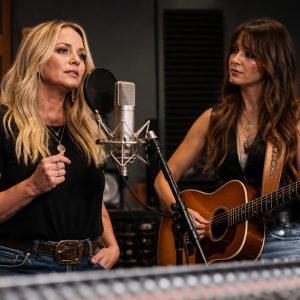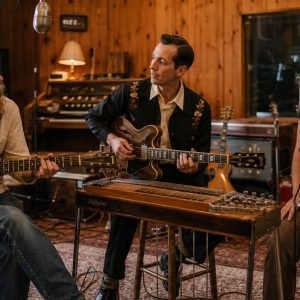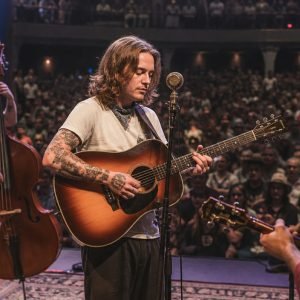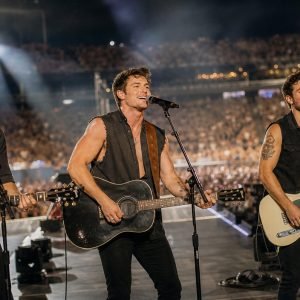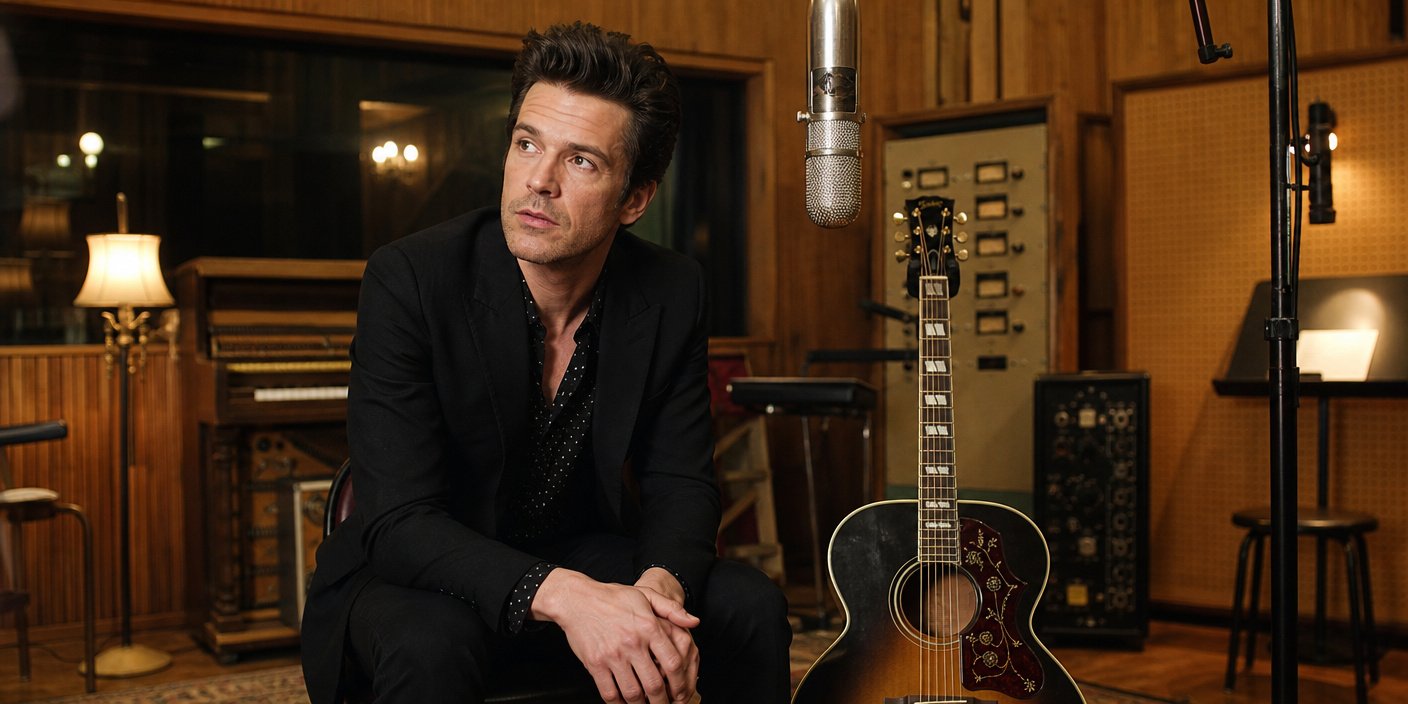
Brandon Flowers, the iconic voice behind the synth-rock juggernaut The Killers, has officially marked a dramatic stylistic departure today with the release of his surprise solo album, ‘Thrasher.’ Moving away from the neon-soaked anthems of Las Vegas, Flowers has retreated to the hallowed grounds of Nashville, Tennessee, to embrace his country roots. The project, recorded at the legendary RCA Studio A, represents more than just a creative side-step; it is a meticulously crafted homage to the Americana tradition, featuring an elite cadre of session players that ground the record in authentic, grit-filled musicianship.
Key Highlights
- Genre Shift: Flowers pivots from stadium rock to a traditional, rootsy country sound on ‘Thrasher.’
- Historic Venue: The album was tracked at RCA Studio A in Nashville, a studio famously known for its role in the evolution of the ‘Nashville Sound.’
- Elite Collaboration: The record features heavy-hitting session players including acclaimed guitarist David Rawlings and legendary harmonica virtuoso Charlie McCoy.
- Solo Initiative: Unlike the high-production spectacle of The Killers, ‘Thrasher’ is an exercise in acoustic intimacy and narrative-driven songwriting.
The Nashville Alchemy: Why ‘Thrasher’ Demanded RCA Studio A
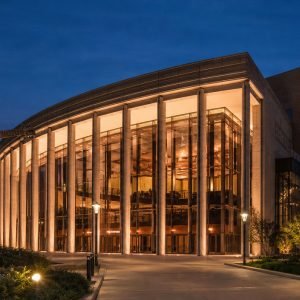
When a songwriter of Brandon Flowers’ stature decides to pivot, the environment often dictates the outcome. For ‘Thrasher,’ Flowers chose RCA Studio A, a sanctuary of music history where legends like Dolly Parton, Waylon Jennings, and Elvis Presley once laid down tracks. This was not a stylistic choice; it was a sonic necessity. The studio, known for its distinct, warm acoustic properties and lack of the sterile digital sheen found in modern recording facilities, allowed Flowers to capture the raw energy of the room.
The Session Virtuosos
The authenticity of ‘Thrasher’ is anchored by its collaborators. David Rawlings, a guitarist celebrated for his intricate flatpicking style and his longtime partnership with Gillian Welch, brings a nuanced, textural depth to the album’s arrangements. His influence is palpable; the guitar work on ‘Thrasher’ eschews the bombastic, wall-of-sound production of Flowers’ rock background in favor of a nimble, folk-adjacent precision.
Perhaps even more significant is the inclusion of Charlie McCoy. A titan of the Nashville session scene, McCoy’s harmonica work has graced albums by everyone from Bob Dylan to Simon & Garfunkel. His presence on ‘Thrasher’ acts as a connective tissue to the golden era of country music. When McCoy’s harmonica weaves through Flowers’ vocal lines, it elevates the record from a mere experiment into a genuine study of Americana storytelling.
The Evolution of the Songwriter
Flowers has always been a storyteller, but ‘Thrasher’ sees him trading his grand, cinematic metaphors for something more grounded. In the past, his writing with The Killers often tackled the concept of the American Dream through the lens of suburban escapism. Here, he shifts his focus inward and backward. The song structures are tighter, the emotional stakes are more intimate, and the production allows the imperfections of the performance—the fret noise, the breath before a verse—to remain in the mix. This transparency is the hallmark of the project.
Secondary Angles: Exploring the Crossover
1. The ‘Prestige Crossover’ Phenomenon: ‘Thrasher’ is part of a larger trend where rock icons of the 2000s are increasingly turning to Americana and country to find artistic renewal. This pivot is often perceived as a ‘maturation’ phase, allowing artists to bypass the pressures of radio-format rock and explore legacy-driven songwriting.
2. The Preservation of Analog Spaces: The decision to record at RCA Studio A highlights the ongoing battle to preserve historic studios. As many historic Nashville rooms are repurposed into condos or modernized beyond recognition, artists like Flowers using these spaces brings renewed attention to the architectural necessity of preserving ‘sonic landmarks.’
3. The Economic Impact of Nashville Sessions: By bringing top-tier talent like Rawlings and McCoy into the fold, the project underscores the continued relevance of the Nashville session player economy. It reinforces the city’s position not just as a hub for commercial country, but as a premier destination for any artist seeking ‘organic’ sonic textures.
FAQ: People Also Ask
Q: Is ‘Thrasher’ a country album in the modern radio sense?
A: No. ‘Thrasher’ draws heavily from traditional country, folk, and Americana. It avoids modern pop-country tropes in favor of a raw, analog sound reflective of the classic Nashville era.
Q: Why did Brandon Flowers choose to record at RCA Studio A?
A: RCA Studio A is historically significant for its ‘Nashville Sound’ and acoustic warmth. Flowers utilized the space to capture a specific, organic atmosphere that synthetic studio environments cannot replicate.
Q: Will this affect the future of The Killers?
A: There is no indication that ‘Thrasher’ signals the end of The Killers. It is being positioned as a solo side project, allowing Flowers to explore different creative avenues outside the band’s established soundscape.
Q: Who are the key musicians featured on the album?
A: The album features acclaimed guitarist David Rawlings and legendary session harmonica player Charlie McCoy, alongside an ensemble of seasoned Nashville-based musicians.