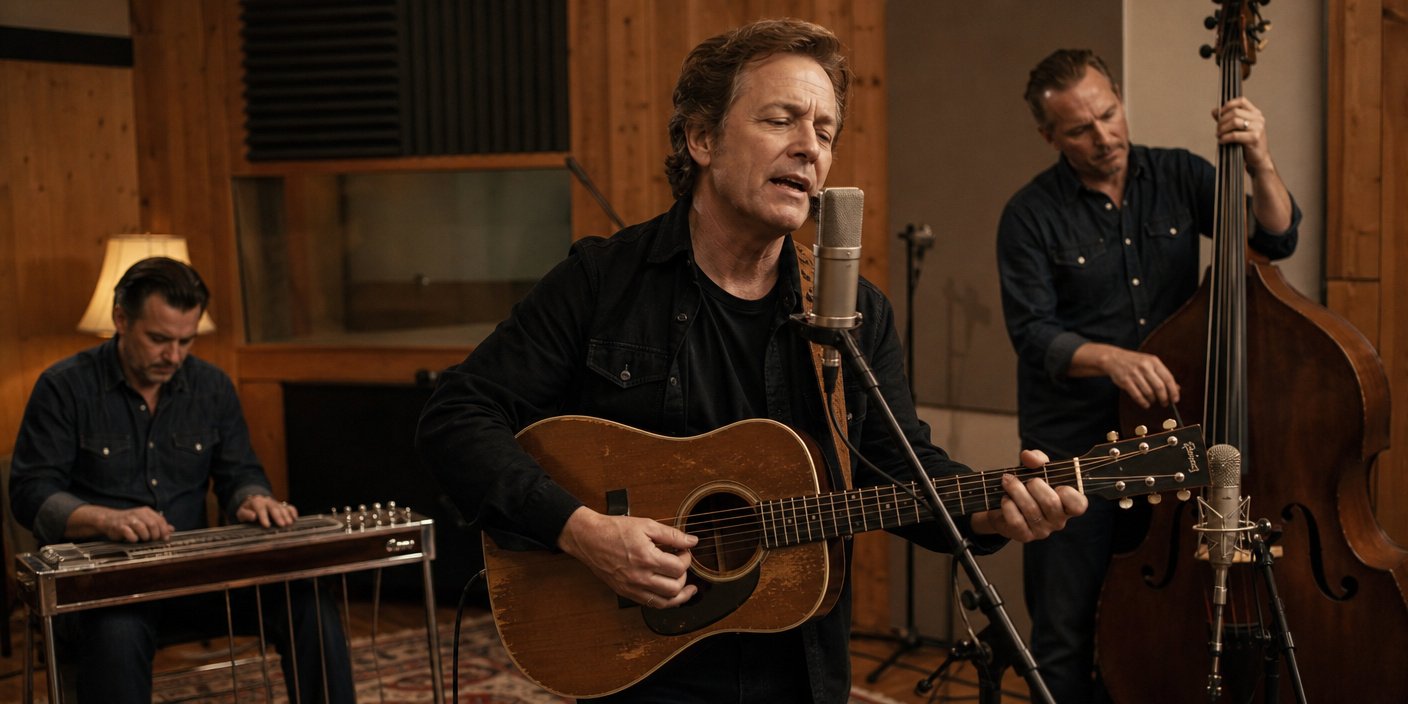
In an era where country music is increasingly dominated by pop-leaning production, Auto-Tune, and corporate songwriting metrics, Robert Henry & the Repeaters have carved out a space that feels increasingly rare: an authentic, traditional country sound. Their latest album, “Down The Road,” is not merely a collection of songs; it is a declaration of principles. By stripping away the synthetic gloss that defines the current Nashville mainstream, the band reclaims the roots of Americana and honky-tonk, proving that the most resonant music often comes from the most unpretentious sources.
The Sonic Landscape of ‘Down The Road’
When listening to “Down The Road,” the listener is immediately struck by the deliberate choices in instrumentation. Robert Henry has eschewed the modern “stadium country” sound—heavy on programmed drums and electronic loops—in favor of organic arrangements. There is a palpable texture to this record. The acoustic guitars have a sharp, percussive clarity, the pedal steel weeping in the background feels earned rather than added, and the rhythm section provides a heartbeat that feels human, not quantized.
This album operates on a premise that is antithetical to today’s streaming-first culture: that a song should be built around a narrative rather than a hook. The title track, “Down The Road,” acts as the thematic anchor for the entire project. It is a contemplative piece that mirrors the band’s journey, suggesting that the path of the artist is best traveled with one’s integrity intact, regardless of the commercial pressures to change course. Throughout the tracklist, Henry’s voice is dry, seasoned, and entirely free of digital correction, delivering lyrics that focus on storytelling—a lost art form in the current cycle of genre-hopping hits.
Why Unpretentious Production Matters
There is a growing fatigue among country music purists regarding the “Nashville Sound” of the last decade. As labels have leaned further into crossover appeal, fans of traditional storytelling have felt alienated. Robert Henry & the Repeaters are filling a vacuum. By keeping the production unpretentious, the band allows the listener to connect directly with the song. This is the antithesis of the “wall of sound” aesthetic that often obscures the flaws—and, consequently, the personality—of a performer.
On tracks like “Lonesome Highway” and “Whiskey & Wood,” the band embraces the imperfections of live recording. You can hear the slide of fingers on fretboards and the subtle room ambience that modern pop production typically scrubs away. This is not a failing; it is a feature. It signals to the audience that what they are hearing is real, tangible, and replicable in a live setting, a vital component for any band aiming to build a loyal, long-term fanbase outside of viral algorithms.
Secondary Angle: The Economics of Authenticity
From a music industry perspective, Robert Henry & the Repeaters represent a significant economic shift: the rise of the independent artist who thrives by ignoring commercial homogenization. For independent acts, the cost of “keeping it real” is high. Without major label marketing budgets or access to the most powerful playlists, a band’s success depends entirely on word-of-mouth and the caliber of their songwriting. “Down The Road” is a high-stakes gamble on the idea that quality, traditional music still has a paying audience. If the album’s early traction is any indication, the gamble is paying off. The band proves that while they may not capture the ephemeral “viral hit” market, they are capturing something far more sustainable: a dedicated, repeat-listening audience.
Secondary Angle: The Storytelling Revival
Contemporary country music has often been criticized for its preoccupation with tropes—dirt roads, trucks, and Friday nights. While Henry touches on traditional themes, he approaches them with a nuance that elevates the material. His songwriting focuses on the emotional complexity of these archetypes rather than just listing them. This shift is part of a broader, nascent movement in the Americana sphere, where artists are using the traditional palette of country music to explore heavier, more mature themes of loss, aging, and redemption. By grounding the album in specific, relatable experiences, Henry creates a world that the listener wants to inhabit.
Secondary Angle: The Chemistry of The Repeaters
It is impossible to discuss this album without addressing the band chemistry. A singer is only as good as the musicians surrounding them, and “The Repeaters” operate with an intuitive cohesion that takes years to develop. The interplay between the rhythm section and the lead instrumentation suggests a band that has spent thousands of hours in garages and small clubs before ever entering a studio. This cohesion is the invisible glue of “Down The Road.” It prevents the record from feeling like a “singer-songwriter project with backing tracks” and instead makes it feel like a collective, organic endeavor. That difference in energy is precisely what separates “Down The Road” from the plethora of solo country projects that hit the market every year.