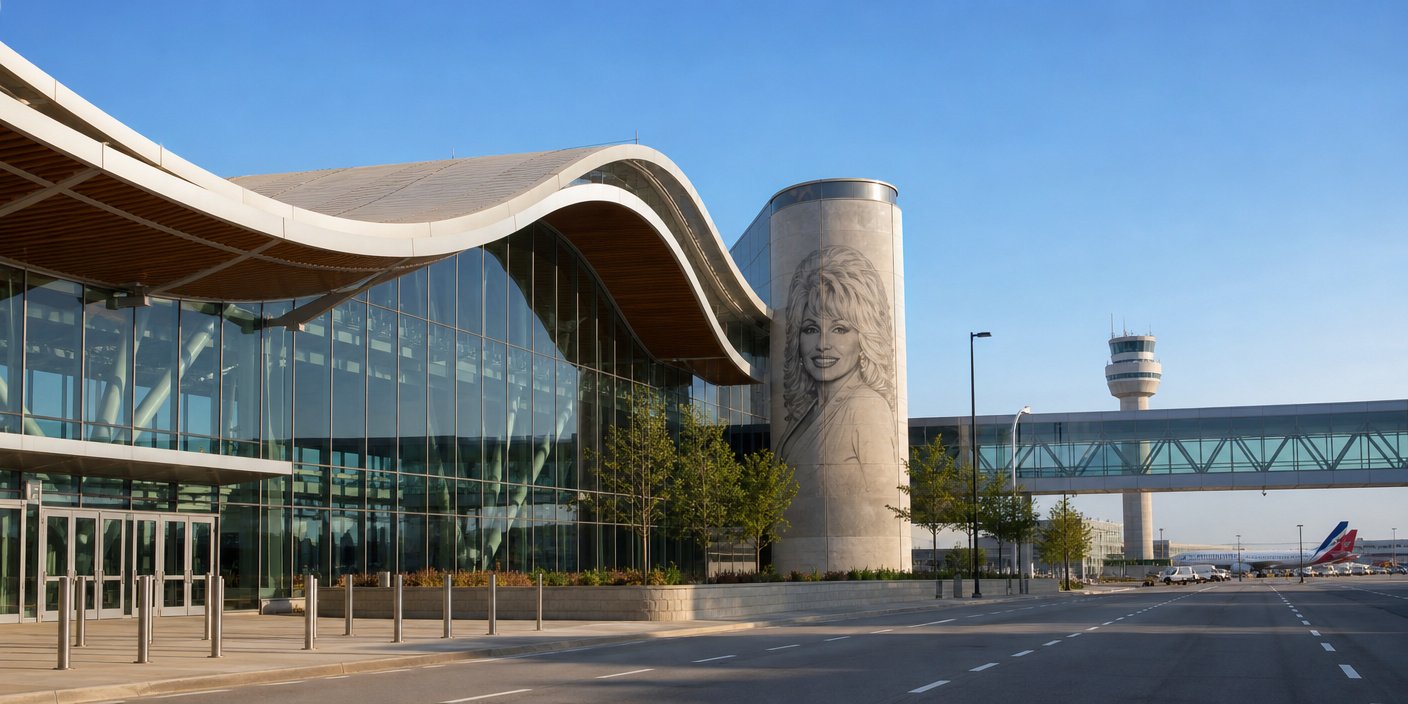
The path to naming the Nashville International Airport after the late Dolly Parton has advanced significantly following a unanimous 6-0 vote by the Metropolitan Nashville Airport Authority (MNAA) to adjust their restrictive naming policy. While the airport currently operates under the designation BNA, this administrative pivot marks the first concrete step in a long-discussed cultural movement to rename or bestow an honorary title upon the transport hub in honor of Tennessee’s most famous resident.
Key Highlights
- Unanimous Approval: The Metropolitan Nashville Airport Authority board voted 6-0 to revise naming protocols, removing previous barriers to honoring individuals.
- Policy Shift: The change allows for the possibility of renaming terminal facilities or the airport itself, shifting away from rigid, strictly functional naming conventions.
- Symbolic Significance: The potential naming reflects Nashville’s status as ‘Music City’ and cements Parton’s enduring legacy in the state.
- Operational Continuity: Any potential naming adjustments must still navigate federal and local aviation compliance frameworks, ensuring that the BNA call sign and operational status remain unaffected.
Navigating the Policy Shift: A New Era for BNA
The recent 6-0 vote by the Metropolitan Nashville Airport Authority represents a seismic shift in governance for one of the nation’s fastest-growing transit hubs. For years, the official moniker of Nashville International Airport (BNA) remained strictly tethered to its geographic location, governed by a policy that prioritized municipal clarity over cultural celebration. By voting to amend these bylaws, the MNAA has essentially opened the door to the ‘Dolly Parton Airport’ concept—an idea that has long circulated among residents and tourism boards as the ultimate tribute to the country music legend.
The Mechanics of Airport Naming
Renaming an international airport is a complex bureaucratic endeavor. Unlike naming a street or a local park, an airport must balance civic identity with international aviation standards. The Federal Aviation Administration (FAA) requires strict adherence to identification protocols to ensure pilots and ground crews maintain absolute clarity. The MNAA’s decision does not change the airport’s IATA code—BNA—which will remain synonymous with Nashville globally. Instead, the board is looking at a model similar to other high-profile airports, such as the John Wayne Airport in Santa Ana or the Louis Armstrong New Orleans International Airport, where the facility functions under a dual identity: a geographic location for navigation and an honorary name for the public face of the hub.
Why Now? The Economic and Cultural Case
Dolly Parton is not merely a musician; she is a global brand and a cornerstone of Tennessee’s tourism industry. With Tennessee experiencing record-breaking tourism numbers, aligning the state’s primary gateway with its most beloved cultural icon is viewed by economic strategists as a savvy branding move. The ‘Dolly Parton’ brand evokes hospitality, warmth, and artistic excellence—qualities the Nashville Metropolitan government is keen to broadcast to the millions of travelers passing through the terminal annually. The 6-0 vote suggests that the board recognizes this value, viewing the potential renaming as an investment in the city’s international ‘Music City’ brand identity.
Future Hurdles and Public Sentiment
While the MNAA has cleared the policy hurdle, the transition remains in its infancy. There is no official timeline for the renaming, and the board must now engage in public hearings and stakeholder consultations. There is also the matter of public sentiment; while overwhelming support exists for Parton, Nashville is a city that prides itself on its authentic roots. The challenge for the MNAA will be to ensure the naming process feels organic and celebratory, rather than corporate or forced. The consensus among local officials is that any official renaming of the main terminal or the facility at large would require a phased approach, perhaps starting with specific concourses or arrival wings before committing to a full rebranding of the Nashville International Airport.
The Legacy of ‘Music City’ Identity
If realized, the Dolly Parton Airport would be the most prominent homage to a musician in the United States. It would act as a structural manifestation of Nashville’s soul. By codifying this change in policy, the MNAA isn’t just changing a sign on a building; they are acknowledging that the city’s primary infrastructure serves a dual purpose: facilitating travel and acting as a monument to the culture that makes the city a global destination. The upcoming months will likely see intense debate regarding which specific sections of the facility should bear the name, or if the entire airport will adopt the honorary title. Regardless of the outcome, the unanimous vote has transformed a fan-driven petition into a legislative reality, signaling that the ‘Dolly Parton Airport’ is no longer a matter of ‘if,’ but a question of ‘how’ and ‘when.’
FAQ: People Also Ask
Q: Will the Nashville International Airport code (BNA) change?
A: No. The airport code ‘BNA’ is established by the International Air Transport Association and is tied to the airport’s history as the ‘Berry Field Nashville’ airfield. This code will not change, ensuring flight safety and logistical continuity.
Q: Is the airport officially renamed as of today?
A: No. The recent 6-0 vote by the MNAA board was to amend the naming policy to permit such honors. The actual renaming process is a separate, future administrative step that will require further deliberation and public input.
Q: Are there other airports named after musicians?
A: Yes, the most prominent example is the Louis Armstrong New Orleans International Airport (MSY). The Nashville initiative would place BNA in similar company, aligning the city’s tourism identity with its greatest musical export.
Q: What was the primary barrier to naming the airport before this vote?
A: The previous naming policy was highly restrictive, emphasizing geographical or purely municipal identifiers. The board’s amendment removes these barriers, providing a legal pathway for honorary naming conventions.