Every genre has its calendar markers—dates that resonate with the weight of tradition, innovation, and industry milestones. For the dedicated fan, August 30 stands as a pivotal moment in country music history. It is a day that bridges the gap between the trailblazing pioneers who broke gender barriers and the masterful storytellers who defined the sound of the modern era. By examining the events of this specific day, we gain a deeper appreciation for the evolution of country music history, recognizing how past legends laid the groundwork for today’s industry icons.
The Pillars of Nashville: Celebrating Icons and Authors
The Queen’s 90th Milestone: Kitty Wells
On August 30, 2009, the country music community came together to celebrate the 90th birthday of Muriel Ellen Deason, better known to the world as Kitty Wells. Often referred to as the “Queen of Country Music,” Wells did not merely occupy a space in the industry; she effectively created one. Her 1952 breakthrough single, “It Wasn’t God Who Made Honky Tonk Angels,” was a direct, unapologetic response to Hank Thompson’s “The Wild Side of Life.”
By singing from a woman’s perspective, Wells shattered the prevailing notion that female country artists could only sing about domesticity or unrequited love in a passive capacity. Her songs were grounded in the reality of the honky-tonk lifestyle, which was considered controversial at the time. By the time her 90th birthday arrived in 2009—a year before she would eventually retire—she was being honored not just as a singer, but as a historic entity. Her legacy paved the way for generations of women like Patsy Cline, Loretta Lynn, and Dolly Parton to command the stage with equal authority. When we look back at August 30, we aren’t just observing a birthday; we are observing the endurance of a woman who transformed the social fabric of American music.
A Masterful Induction: Don Schlitz Joins the Opry
Thirteen years after the celebration of Kitty Wells, August 30, 2022, marked another historic occasion on the stage of the Grand Ole Opry. Don Schlitz, the architect behind one of the most recognizable songs in music history, “The Gambler,” was officially inducted into the Grand Ole Opry as a member. This event highlighted a shift in how the industry views the “songwriter.”
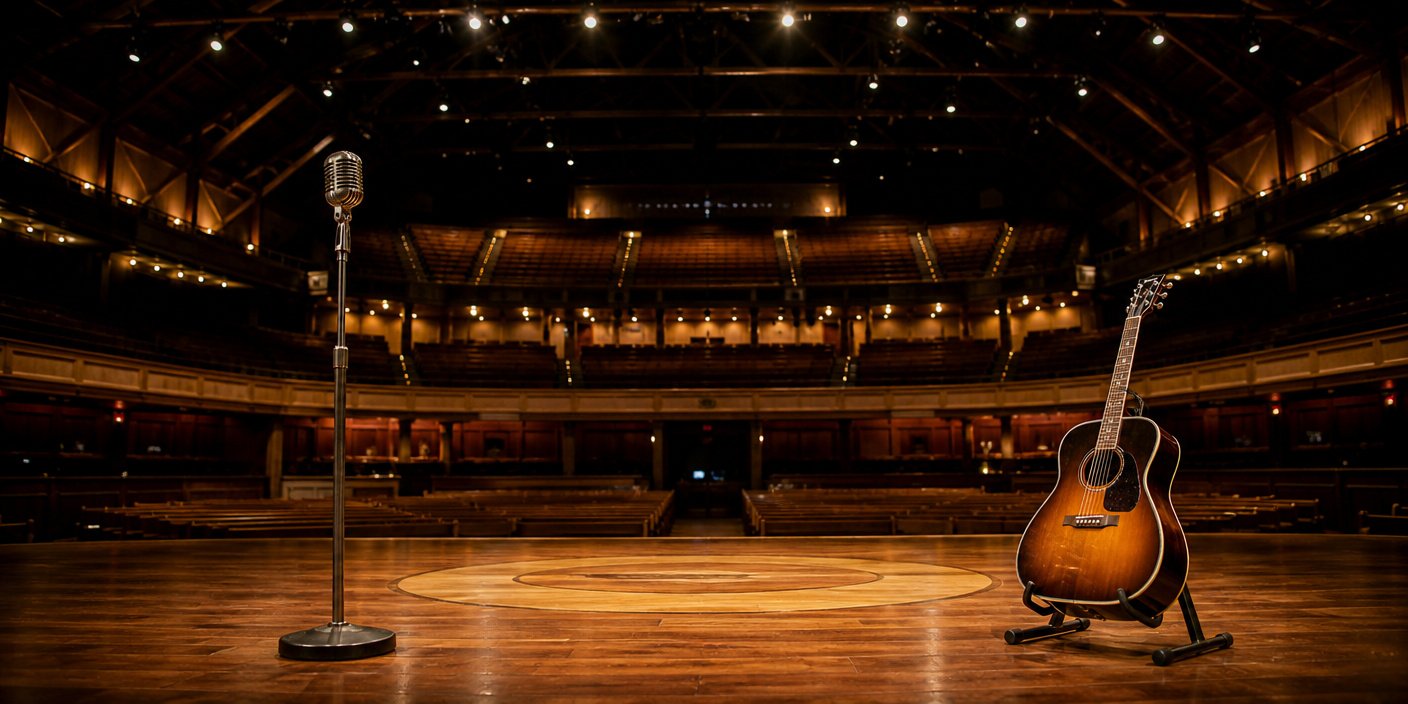
For decades, the Opry was the exclusive domain of the touring performer. However, Schlitz’s induction signaled a deep respect for the craft of songwriting—the literal foundation of the country genre. Schlitz, who famously penned the Kenny Rogers hit “The Gambler,” has been a fixture in Nashville for decades, helping bridge the gap between traditional storytelling and the commercial pop-country crossover explosion of the late 1970s and 1980s. Standing on that legendary circle of wood at the Opry, Schlitz’s induction was a reminder that country music is fundamentally about the narrative. His career, marked by multiple Grammy awards and a Country Music Hall of Fame status, proves that the writer is just as essential to the ecosystem as the voice that carries the tune.
Secondary Angles: The Evolution of the Industry
When analyzing these two events—Wells in 2009 and Schlitz in 2022—it becomes clear how the industry has evolved. First, there is the shift from performance-first to creator-first recognition. While Wells was a performer, her fight was for a seat at the table. Schlitz’s induction represents the industry’s maturity in validating the behind-the-scenes talent that makes the table exist in the first place.
Second, we must look at the economic impact of these legacies. Kitty Wells’ early success established the commercial viability of female artists, which became a multi-billion dollar segment of the industry. Conversely, Don Schlitz’s songwriting catalog represents the intellectual property backbone of Nashville. Every time “The Gambler” or any of his other hits are played, they generate revenue that sustains the publishing arm of country music.
Finally, the cultural preservation aspect cannot be ignored. The Grand Ole Opry’s choice to induct songwriters is a modern strategic move to ensure that the history of the genre is protected. By celebrating these dates, institutions like the Opry reinforce their own relevance, connecting the 1950s honky-tonk era to the contemporary songwriter-driven landscape.
FAQ: People Also Ask
Why is August 30 considered an important date in country music?
August 30 is significant because it marks key milestones for two of the genre’s most influential figures: the 90th birthday of “Queen of Country Music” Kitty Wells in 2009 and the official induction of legendary songwriter Don Schlitz into the Grand Ole Opry in 2022.
Who was Kitty Wells and why does she matter?
Kitty Wells (born 1919) was the first female country artist to reach number one on the country charts with her 1952 hit “It Wasn’t God Who Made Honky Tonk Angels.” She is widely credited with breaking the “glass ceiling” for women in country music.
What is Don Schlitz best known for?
Don Schlitz is a legendary songwriter best known for penning the iconic hit “The Gambler,” which was made famous by Kenny Rogers. He has been a dominant force in Nashville songwriting for over four decades.
How has the Grand Ole Opry changed its induction criteria?
Historically, the Opry was focused primarily on performers. However, in recent years, the organization has recognized the critical role of songwriters, leading to the induction of figures like Don Schlitz, which emphasizes that the creator of the music is as vital as the artist.
What does “The Gambler” represent in country music history?
“The Gambler” is considered a cross-genre masterpiece. It represents the successful crossover of country storytelling into mainstream pop culture, proving that a well-crafted song could transcend regional limitations and reach a massive global audience.