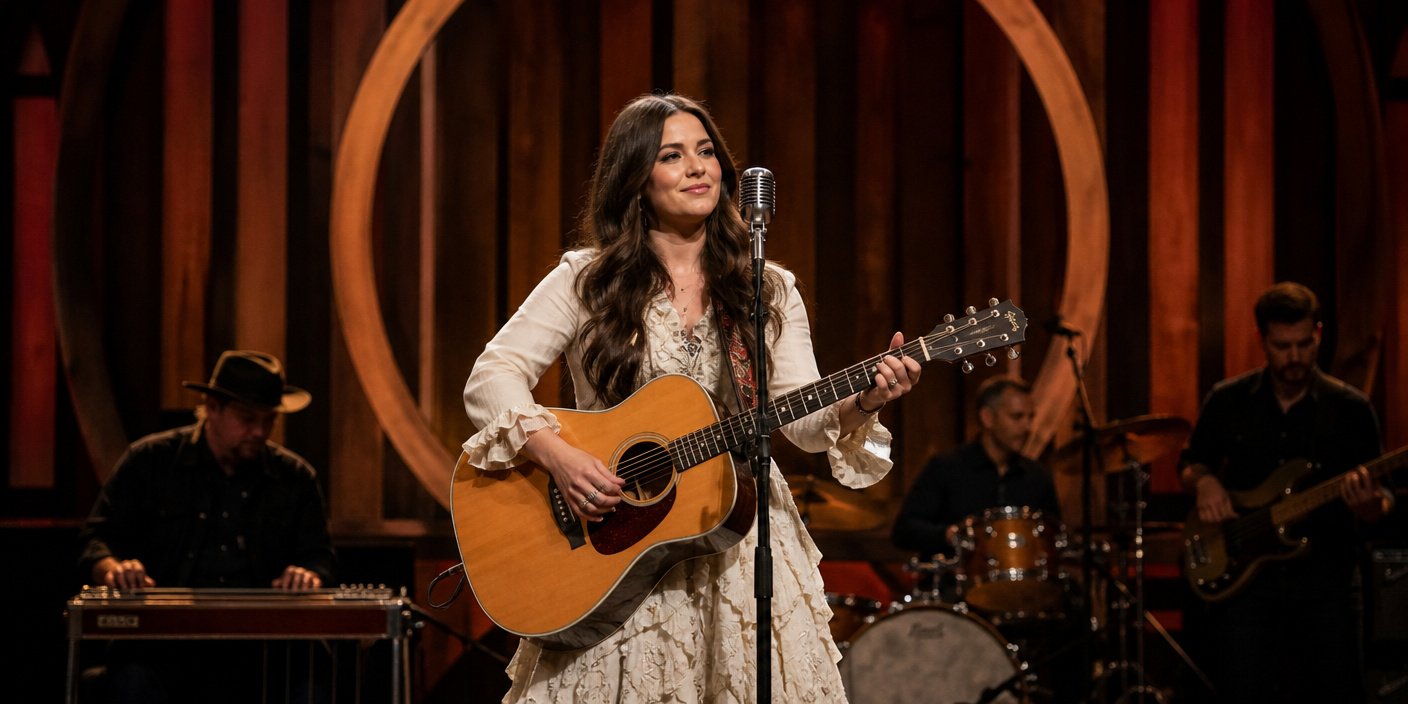
Stella Lefty, the breakout country-pop artist whose single “Boston” has ascended to No. 2 on the Billboard Hot 100, finds herself at the epicenter of a polarized cultural debate. While her meteoric rise, largely fueled by TikTok algorithms, initially seemed like a classic industry success story, a recent debut at the Grand Ole Opry—marked by a notable charity appearance with St. Jude Children’s Research Hospital—has inadvertently triggered a fierce internet pile-on. Accusations of being a “nepo baby” and critiques regarding the organic nature of her ascent have replaced the initial celebrations of her musical talent, highlighting the growing friction between traditional industry gatekeeping and digital-age fandom.
Key Highlights
- Chart Dominance: “Boston” currently sits at No. 2 on the Billboard Hot 100, a rare feat for a rising artist without a major label legacy.
- The Opry Catalyst: The scrutiny intensified immediately following her high-profile debut at the Grand Ole Opry, an event traditionally reserved for artists with deeper ties to the genre.
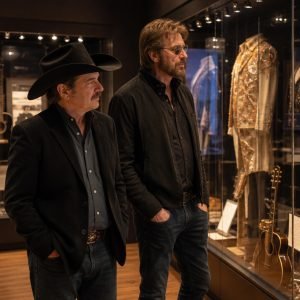
- Charity Controversies: A charitable appearance with St. Jude Children’s Research Hospital, intended as a heartwarming publicity moment, was criticized by skeptics as a “performative” attempt to soften her image.
- The Nepotism Debate: Online discourse has focused heavily on Lefty’s background, with viral threads attempting to “expose” industry connections that critics argue accelerated her career beyond traditional meritocratic paths.
The Authenticity Crisis: Anatomy of the Stella Lefty Backlash
The narrative surrounding Stella Lefty is a masterclass in the “authenticity trap” of the modern digital music landscape. When an artist achieves massive, overnight success through platforms like TikTok, the audience often demands a level of transparency that traditional labels are ill-equipped to provide. With “Boston” holding steady at No. 2 on the Billboard Hot 100 for the second consecutive week, the scrutiny on Lefty has transcended her musical output and settled firmly onto her identity.
The Shift from TikTok to Nashville
Lefty’s rise began in the digital sphere, where short-form, looped content allowed “Boston” to dominate streaming charts before traditional radio had even warmed up to the track. However, the Grand Ole Opry stage represents the ultimate gatekeeper in country music. For many listeners, a debut at the Opry is a sacred milestone earned through years of touring, songwriting, and genre dues-paying. When Lefty took the stage, the transition from “TikTok star” to “Opry performer” felt jarring to a significant subset of the country audience. This disconnect was the spark; the internet pile-on was the fire. Critics were not just debating her vocal performance; they were debating her right to stand on that specific stage, framing her success as an affront to artists who have spent a decade climbing the ladder in Nashville.
The ‘Nepo Baby’ Discourse in Country-Pop
The “nepo baby” tag, a term that has defined cultural discourse across Hollywood for the last two years, has now fully infiltrated the country-pop crossover scene. Online investigators have scoured public records and social media archives, aiming to link Lefty to established industry figures. Whether or not these allegations hold factual weight, the perception has taken hold. In an era where fans pride themselves on being “investigative” consumers, the mere existence of doubt regarding a celebrity’s origins can act as a catalyst for viral vitriol. This reflects a broader societal cynicism regarding meritocracy, where the audience assumes that any “overnight” success must be the product of invisible structural advantages rather than raw talent or algorithmic luck.
The Charity-as-PR Dilemma
The most complex layer of this controversy involves her appearance with St. Jude Children’s Research Hospital. Typically, performing for a charity of such high standing is a reputational “armor” that protects an artist from criticism. In Lefty’s case, it backfired. Skeptics pointed to the timing of the event—occurring right as the “nepo baby” allegations began to trend—to label the move as a calculated PR maneuver designed to distract from the scrutiny. This cynical interpretation of philanthropy is a modern phenomenon: the audience is no longer willing to accept “good deeds” at face value, instead analyzing the marketing mechanics behind every charitable photo op. It poses a difficult question for future PR teams: how does an artist demonstrate altruism in an environment that is primed to see every action as a strategic weapon?
Secondary Angles: Industry Impact
1. The Death of the ‘Slow Burn’ Career: The music industry is shifting away from years of developmental growth in favor of rapid, algorithm-driven spikes. Lefty’s experience suggests that the audience may be rejecting this model, feeling cheated out of the “narrative” of the struggling artist.
2. The Algorithm as an Industry Gatekeeper: TikTok is no longer just a promotional tool; it is the primary A&R department. As labels lean into this, they must contend with the fact that the audience feels a sense of ownership over the artists they “discover” online, leading to a volatile fan-to-artist relationship.
3. Genre Fluidity and Protectionism: Country music prides itself on heritage. The clash between Lefty’s pop-inflected country style and the traditionalist fanbase suggests that “authenticity” in music is increasingly defined by the perception of origin rather than the sound of the recording.
FAQ: People Also Ask
Q: What exactly is the ‘nepo baby’ accusation against Stella Lefty?
A: The term refers to allegations circulating on social media that Lefty’s rapid rise was facilitated by familial connections within the music industry, rather than purely organic growth or talent, a claim she has yet to formally address.
Q: Why was her Grand Ole Opry debut controversial?
A: Traditionalists felt that her appearance at the Opry—a venue viewed as a bastion of country music heritage—came too early in her career, implying she bypassed the traditional “dues-paying” circuit that most country artists endure.
Q: Did her St. Jude appearance successfully improve public perception?
A: While the event was intended to demonstrate goodwill, it inadvertently fueled further scrutiny, with many online critics labeling the appearance as a tactical, performative effort to counter the ongoing negative narratives surrounding her career.
Q: How did ‘Boston’ reach the No. 2 spot on the Billboard Hot 100?
A: The song’s success is largely attributed to a massive, sustained viral trend on TikTok that translated into high streaming numbers, effectively bypassing the traditional radio promotion timeline.