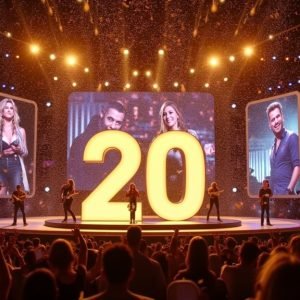
In a sudden and unexpected move that has sent shockwaves through the Australasian live entertainment industry, Ticketek Entertainment Group (TEG) announced the immediate cancellation of the ‘Longhaul Festival’ today. The move comes a mere month after the promoter unveiled the multi-city country music event, which was scheduled to launch in January 2027. The cancellation effectively halts what was anticipated to be one of the region’s largest country music gatherings, featuring international heavyweights Kane Brown and Kacey Musgraves as the headline acts.
The swift dissolution of the festival plans highlights the growing volatility within the live touring market, where skyrocketing production costs and shifting consumer spending habits are forcing promoters to reassess even the most high-profile ventures. For fans who had begun preparing for a summer of country music, the announcement marks a significant disappointment and a stark reminder of the financial complexities inherent in staging massive, multi-city international tours.
The Anatomy of an Abrupt Cancellation
When TEG first teased the Longhaul Festival, the industry viewed it as a bold play to capitalize on the surging popularity of country music in Australia and New Zealand. By securing marquee talent like Kane Brown and Kacey Musgraves, TEG appeared to be positioning the event as the premier destination for the genre. However, the decision to pull the plug just 30 days after the initial announcement suggests that the economic metrics—ranging from insurance premiums to logistics and ticket-presale modeling—did not align with the group’s internal feasibility thresholds.
Industry insiders note that “pulling the plug” this early, while costly in terms of reputation and administrative work, is often a strategic choice to mitigate far greater financial losses. By canceling before tickets officially went on sale or before significant infrastructure was booked, TEG has likely opted to cut its losses before the liability scaled into the millions. This decision reflects a conservative turn in the live entertainment sector, where promoters are increasingly wary of over-extending in a post-pandemic economy still grappling with inflationary pressures.
Market Volatility and the ‘Country Wave’
The cancellation of Longhaul Festival is particularly puzzling given the current “Country Wave” currently dominating global music charts. Artists like Kane Brown and Kacey Musgraves have seen record-breaking streams and consistent sell-out shows in North America. This success usually translates well to the Australian market, which has historically been a strong supporter of US country acts.
However, the Australian touring market is currently facing a unique set of challenges. The “cost of living” crisis has tightened the discretionary spending of average consumers, making high-priced festival tickets a harder sell than they were even two years ago. When combined with the high cost of international freight, artist transport, and the fluctuating exchange rate of the Australian dollar against the US dollar, the math behind a multi-city festival becomes increasingly precarious. TEG’s decision likely stems from an assessment that the projected ticket sales could not sustainably cover these massive overheads.
Operational Headwinds: The Logistics of Global Touring
Beyond the economics of consumer behavior, the logistical demands of an international, multi-city festival tour are immense. Moving high-tier production crews, lighting rigs, sound systems, and personal management teams for superstars like Brown and Musgraves across major metropolitan hubs requires flawless synchronization.
In recent years, the industry has faced a shortage of skilled labor and increased costs for staging and rigging, which have pushed the price of producing a show to new heights. If a promoter identifies that these logistical costs are trending upward during the pre-production phase, they are forced into a difficult position: raise ticket prices to unsustainable levels or cancel the event entirely. TEG’s choice, while abrupt, speaks to a broader trend of promoters choosing to abandon projects rather than risk the reputational damage of an under-resourced or failing event once it has already commenced.
The Ripple Effect for Headliners and Promoters
For the headliners, Kane Brown and Kacey Musgraves, this cancellation is a logistical inconvenience but not a career setback. Both artists operate on a global scale with high demand for their performances. Their management teams will likely pivot quickly, focusing on other international markets or standalone venue shows that require less infrastructure than a multi-city festival tour. However, the impact on local Australian support acts, vendors, and service providers who were banking on the festival for revenue is more direct. The loss of a major festival removes a significant platform for local artists and a vital revenue stream for local production crews, highlighting the precarious nature of the touring ecosystem in the current economic climate.
Moving forward, the industry will be watching TEG closely to see if they recalibrate their strategy for large-scale outdoor events. This cancellation serves as a cautionary tale: in the current landscape, brand power and artist star-status are no longer automatic guarantees of financial success. The ability to manage costs, logistics, and market appetite with precision is the new gold standard for success in the entertainment sector.
FAQ: People Also Ask
Q: Was the Longhaul Festival officially canceled or just postponed?
A: TEG has explicitly stated the event is canceled. There have been no announcements regarding a future date or rescheduling, implying that the project in its current form will not proceed.
Q: Will Kane Brown and Kacey Musgraves still tour Australia?
A: As of now, the cancellation specifically targets the Longhaul Festival. Neither artist has confirmed new tour dates in the region to replace the festival, though fans should monitor their official channels for any independent, standalone shows.
Q: Why would a promoter cancel an event so soon after announcing?
A: Promoters often cancel early to minimize “sunk costs.” If internal projections regarding ticket sales, production costs, or logistical feasibility shift dramatically, canceling before full-scale promotion and venue booking begins is a standard, albeit difficult, risk-mitigation strategy.
Q: Does this signal a broader downturn in the Australian music festival industry?
A: It points to increased caution. While the market is not necessarily in a total downturn, promoters are under intense pressure to balance high production costs with consumer spending power, leading to more frequent cancellations of high-risk, large-scale events.