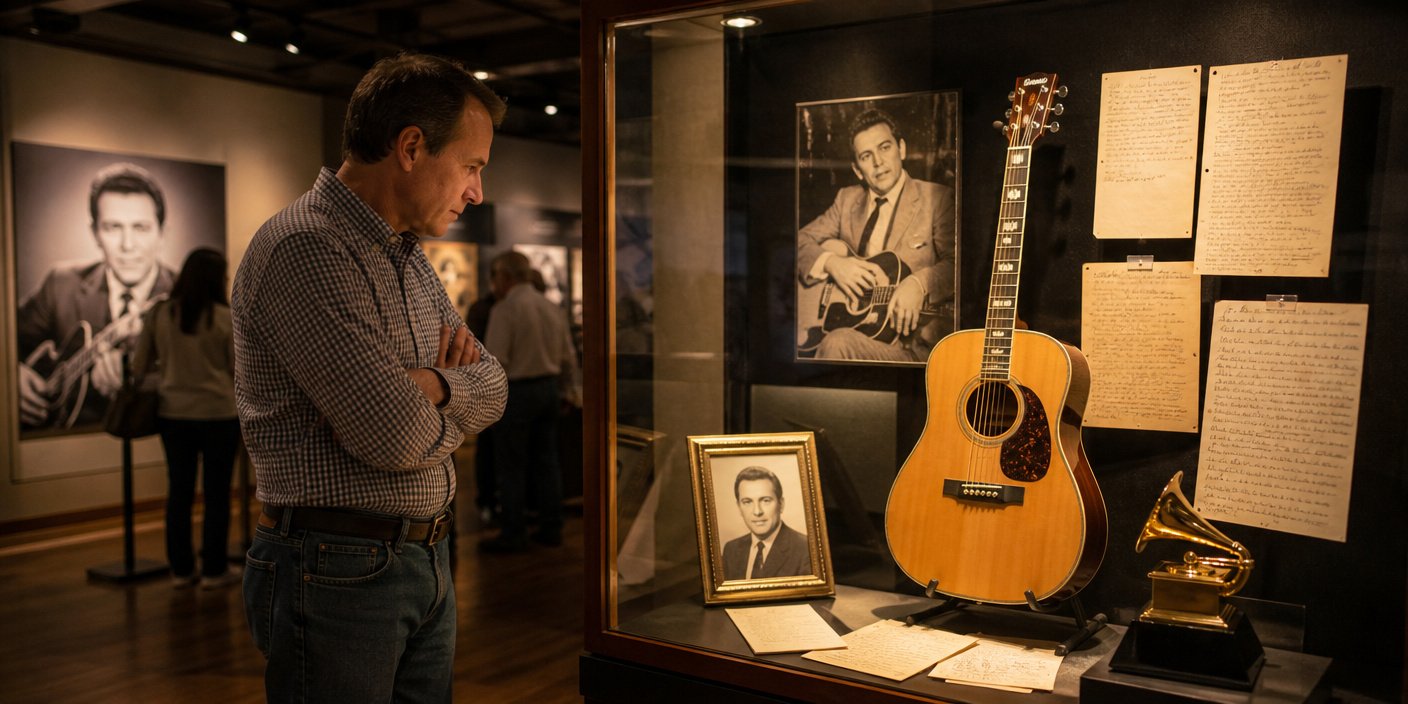
The Country Music Hall of Fame and Museum has officially launched a highly anticipated new exhibit dedicated to the life, career, and enduring creative brilliance of Roger Miller. Known universally as the “King of the Road,” Miller’s career remains a cornerstone of American music history, characterized by his inimitable wit, songwriting prowess, and a unique ability to bridge the gap between traditional country sensibilities and mainstream crossover appeal. This exhibition provides a deep, archival look into the man who captured the hearts of millions with his humor and profound lyrical depth.
Key Highlights
- Comprehensive Retrospective: The exhibit features an extensive collection of personal artifacts, handwritten lyric sheets, and stage costumes that defined Roger Miller’s iconic visual identity.
- Grammy and Industry Honors: Visitors can view the tangible evidence of Miller’s success, including a display of his historic Grammy Award wins that cemented his place in music royalty.
- Narrative Journey: The exhibit traces Miller’s life from his early days in Oklahoma and Texas to his ascension as a Nashville powerhouse and his eventual triumphs on the Broadway stage.
- Exclusive Media: The gallery features rare performance footage and audio commentary that provides new insights into his creative process.
The Architecture of Genius: An Exhibit for the Ages
For music historians and casual fans alike, the new Roger Miller exhibit at the Country Music Hall of Fame and Museum represents a significant milestone in the preservation of American songcraft. Roger Miller was not merely a performer; he was a master of the vignette, a songwriter who could encapsulate the entire human experience within the three-minute duration of a country hit. This exhibit seeks to decode that genius, offering patrons a curated walkthrough of a career that defied simple categorization.
Tracing the Roots of the King of the Road
The centerpiece of the exhibition focuses on the creation of his most famous anthem, “King of the Road.” Released in 1964, the song became a global phenomenon, winning five Grammy Awards and establishing Miller as a dominant force in music. Through original lyric drafts written on napkins and hotel stationery—artifacts on loan from the Miller estate—viewers can see the raw, unfiltered inspiration that fueled his writing. The museum curators have meticulously arranged these items to show how Miller transformed his observations of transient life into a universal narrative that resonated across classes, regions, and cultures.
The Tennessee Transition and Nashville Stardom
Miller’s move to Nashville was a defining moment for both the artist and the city’s burgeoning music scene. The exhibit explores how he navigated the local industry, collaborating with heavyweights and influencing the next generation of country stars. By displaying his early instruments and personal documents from his formative years in Nashville, the exhibit illuminates the competitive but collaborative atmosphere of the 1960s Music Row era. It serves as a stark reminder of how Nashville became the epicenter for global country music distribution and why preservation efforts like this are vital for historical context.
Broadway and Beyond: The Versatility of a Master
One of the most compelling aspects of this new exhibit is the focus on Miller’s later career, specifically his Tony Award-winning work on the Broadway musical Big River. Often overlooked in traditional country narratives, Miller’s successful transition into musical theater serves as the third act of this exhibit. It highlights his innate ability to adapt his storytelling voice to different mediums. Photos from the Broadway production, along with his Tony Award, offer visitors a perspective on Miller that extends far beyond the rural imagery often associated with his country hits. It provides a holistic view of an artist who refused to be boxed in by genre labels.
Economic and Cultural Impact on Nashville Tourism
From an economic standpoint, the Country Music Hall of Fame and Museum remains one of Nashville’s most significant cultural assets. The launch of the Roger Miller exhibit is expected to drive substantial foot traffic, reinforcing Nashville’s status as a top-tier destination for music tourism. By highlighting legendary figures like Miller, the museum sustains the “Music City” brand, ensuring that younger generations of fans remain connected to the foundational artists of the industry. This is a critical component of the museum’s ongoing mission to keep the heritage of country music vibrant and financially sustainable for the future.
Understanding the Creative Process
For aspiring songwriters, the exhibit offers a unique educational component. By examining the evolution of Miller’s song structures—often characterized by sudden shifts in melody and unexpected lyrical turns—students of music can glean lessons in composition. The exhibit utilizes interactive displays that allow listeners to isolate specific tracks, hearing the nuances of Miller’s vocal delivery and the clever arrangement choices that made his songs “earworms” long before the term existed. This technical look at his work is perhaps the most valuable takeaway for the modern creative, proving that Miller’s “foolish” humor was underpinned by a sophisticated grasp of music theory.
FAQ: People Also Ask
What are the main artifacts included in the Roger Miller exhibit?
The exhibit features a wide array of personal items, including Miller’s original handwritten lyric sheets for “King of the Road,” his Grammy and Tony Awards, stage costumes, and personal letters that provide insight into his creative journey.
Is this exhibit permanent or temporary at the Country Music Hall of Fame?
The exhibit is a featured, curated showcase that will run for an extended period, allowing fans ample time to visit. However, as with all rotating special exhibits at the Country Music Hall of Fame, it is recommended to check the official museum website for current end dates before planning your trip.
How did Roger Miller influence country music songwriting?
Roger Miller revolutionized country songwriting by introducing conversational, witty, and deeply observational lyrics. He proved that country music could be intellectually sharp and humorous while still maintaining deep emotional resonance, a legacy that continues to influence contemporary country artists.
Can visitors hear Miller’s music within the exhibit?
Yes, the exhibit is highly experiential and includes integrated audio-visual stations where visitors can listen to rare recordings, watch archival performance footage, and hear commentary on Miller’s influence on the industry.