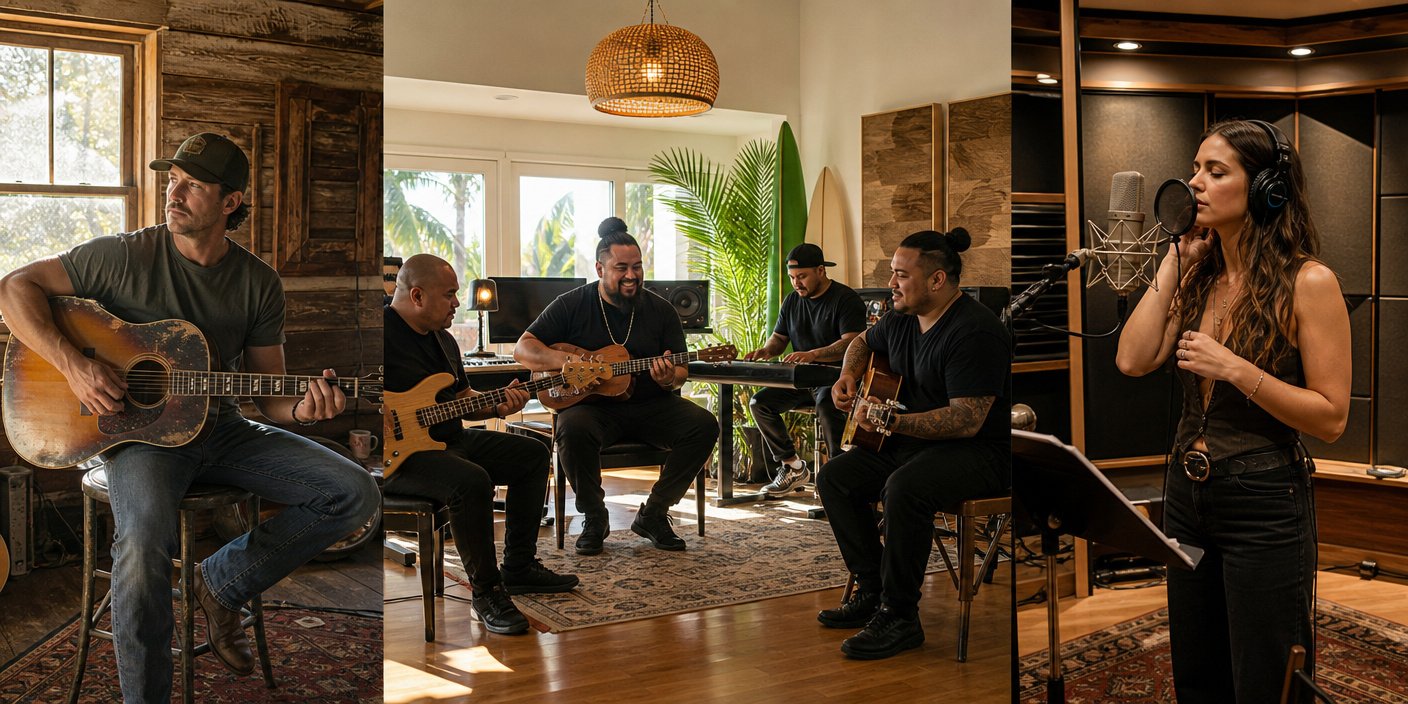
This week in country music, the industry’s ongoing evolution is on full display as artists push the boundaries between neo-traditionalist roots and modern, globalized fusion. The latest Countrytown weekly roundup offers a snapshot of a genre in flux, highlighting a diverse array of releases that bridge the gap between Nashville’s historic songwriting centers and the emerging markets of the Pacific and beyond. As streaming platforms continue to democratize genre definitions, listeners are seeing a wider variety of sounds categorized under the ‘country’ umbrella than ever before, with this week’s featured tracks by Riley Green, Maoli, and Katrina Burgoyne serving as perfect case studies for this shifting musical paradigm.
Key Highlights
- Riley Green Returns to Roots: The announcement of the title track “That’s Just Me” signals a high-stakes return to his neo-traditionalist sound ahead of his October album launch.
- Polynesian Country Fusion: Maoli’s release, “I Got A Beer For That,” underscores the rapidly growing influence of island-reggae-infused country music.
- Global Songwriting Trends: Katrina Burgoyne’s “I Want A Boy Like You, Cowboy” highlights the enduring success of Australian artists in the competitive Nashville songwriting ecosystem.
- The Rise of the Title Track: Analysis shows that artists are increasingly prioritizing title tracks to anchor upcoming album marketing campaigns, a pivot from previous eras.
The Changing Sonic Palette of Modern Country
The landscape of country music is no longer tethered strictly to the geography of Tennessee or the traditional instrumentation of the 1990s. While historical roots remain the foundation, the current industry environment is characterized by a “big tent” approach that accommodates disparate influences, ranging from island-reggae rhythms to sophisticated pop-country production. The latest releases featured in the August 28th roundup encapsulate this diversity. The industry is currently witnessing a push-pull dynamic: on one side, a dedicated segment of the fan base demands a return to the fiddle-and-steel-guitar sound, while another massive demographic is gravitating toward genre-blending tracks that prioritize vibe and lyricism over rigid genre purity. This is not merely a trend but a fundamental alteration of the country music business model, where digital streaming services dictate audience discovery through mood-based playlists rather than radio station demographics.
Riley Green and the Neo-Traditionalist Anchor
Riley Green has emerged as a cornerstone figure for those listeners who feel the genre has wandered too far from its acoustic origins. His new title track, “That’s Just Me,” pulled from his highly anticipated upcoming album Don’t Mind If I Do (scheduled for release on October 18, 2024), serves as a thesis statement for his career. By leaning into the title track as the focal point of his campaign, Green is signaling a return to the album-centric era, contrasting with the singles-first culture that dominates much of the streaming landscape. The track functions as an anchor, grounding his audience in the familiarity of his vocal delivery and storytelling approach. Industry analysts have noted that when artists of Green’s stature utilize the title track to set the tone for an album, they are looking to build a cohesive narrative arc rather than chasing viral one-off hits. This suggests a long-term strategy focused on album sales and tour viability, rather than just momentary TikTok traction.
The Maoli Effect: Bridging Island-Reggae and Country
Perhaps the most fascinating shift highlighted this week is the success of the group Maoli. Their track “I Got A Beer For That” is emblematic of a broader, often overlooked movement in country music: the fusion of island-reggae and country. This sub-genre has cultivated a massive, hyper-engaged fan base in the Pacific and Hawaii, a market that has increasingly overlapped with country demographics. For Maoli, the success of a track like this isn’t an accident; it is the result of years of cultivating a sound that prioritizes the relaxed, rhythmic sensibility of island music with the relatable, everyman lyrical tropes of country. This crossover is vital because it proves that country music’s core identity—the storytelling element—is universal, even when the percussion and tempo differ from the Nashville standard. It opens the door for label executives to look beyond traditional country hubs to find talent that is already dominating regional charts without needing the traditional gatekeepers of Music Row.
Katrina Burgoyne: The International Songwriter Pipeline
Katrina Burgoyne’s “I Want A Boy Like You, Cowboy” provides the third angle of this week’s release roundup: the internationalization of the Nashville songwriter pipeline. Burgoyne, who has successfully navigated the challenging transition from the Australian country scene to the US market, represents a new breed of artist who treats country music as a global professional trade. Her songwriting, often characterized by wit, observational humor, and a sharp pop sensibility, fits seamlessly into the current “modern country” radio format. The track highlights the importance of the globalized talent pool in contemporary country. Nashville has long been an export center, but it is increasingly becoming a destination for talent that has already been tested in international markets. For an artist like Burgoyne, the challenge is maintaining a unique identity while adhering to the sonic expectations of the American market, a balance she appears to strike with precision in this new release.
The Future of Country Music Consumption
As we look toward the final quarter of the year, the combination of these three distinct approaches—Green’s traditionalism, Maoli’s fusion, and Burgoyne’s international pop-country—suggests that country music is currently in its most fragmented and simultaneously its most successful state. The economic impact of this fragmentation is significant; record labels are no longer betting on a single “sound” to rule the charts. Instead, they are diversifying their portfolios, betting on specific artists to capture niche segments of the audience that, when aggregated, create a massive, multi-generational consumer base. As we approach the end of the year, the success of these tracks will be measured not just by radio airplay, which is declining in influence, but by the strength of streaming numbers and ticket sales—two metrics where these three artists are currently outperforming their peers. The era of the monolith is over; the era of the ecosystem has begun.
FAQ: People Also Ask
Q: What makes Riley Green’s new track “That’s Just Me” significant for his career?
A: The track serves as the title cut for his upcoming album Don’t Mind If I Do, marking a strategic return to his core neo-traditionalist sound. It reinforces his brand as a reliable storyteller in a market that often chases fleeting trends.
Q: How is Maoli’s music influencing the country genre?
A: Maoli is at the forefront of the island-reggae-country fusion movement. By blending relaxed island rhythms with traditional country lyrical themes, they are tapping into a massive, under-served demographic in the Pacific and Hawaii, proving that country’s storytelling appeal has global, genre-transcending reach.
Q: Why is the international success of artists like Katrina Burgoyne important?
A: It illustrates the globalization of the Nashville songwriting pipeline. Artists from markets like Australia are increasingly bringing their songwriting craft to the US, effectively diversifying the country sound and proving that the genre is no longer confined to American regional borders.