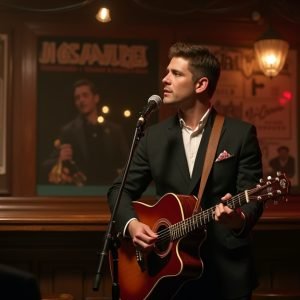
Parker McCollum, the acclaimed artist known for his distinctive sound, has recently opened up about a significant creative pivot, revealing that he scrapped nearly half of his latest album to start anew. In a candid interview, McCollum detailed the challenging process behind his self-titled record, his evolving relationship with the “country singer” label, and an unexpected relocation to New York City that ultimately shaped the new collection of songs.
The Uncomfortable Comfort Zone
McCollum confessed that a primary catalyst for the re-record stemmed from a feeling of becoming too comfortable with his previous collaborator, John Randall. “I felt like I had become too comfortable with my previous collaborator,” McCollum stated, explaining his desire to push his creative boundaries. This realization led him to believe that a fresh perspective and a more challenging environment were necessary to evolve his sound and songwriting. The decision to discard a substantial portion of the album, though potentially daunting, was a deliberate step toward artistic growth.
A New York State of Mind
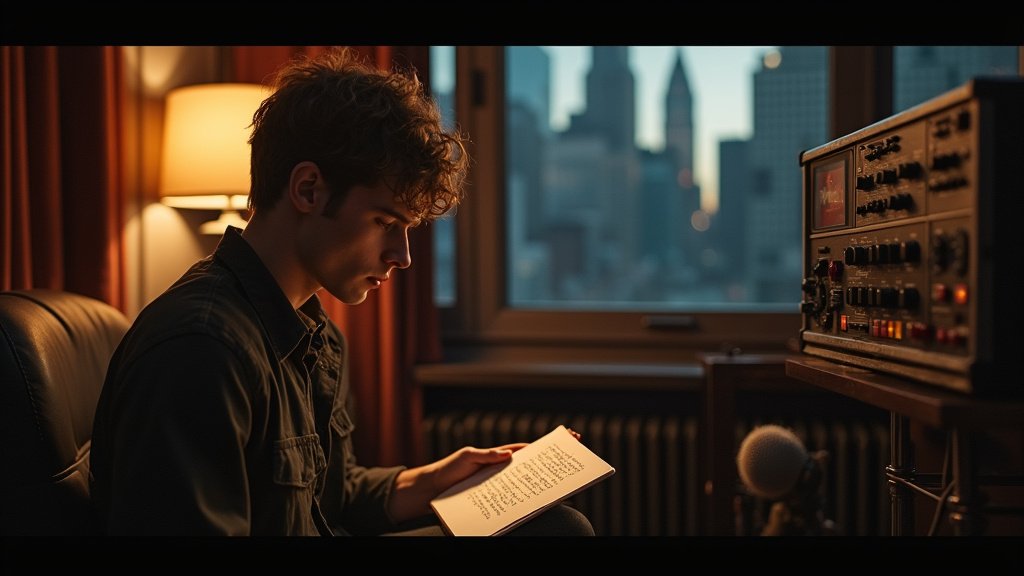
The journey to record the new album led McCollum to the bustling streets of New York City. While the move wasn’t meticulously planned as part of a grand artistic strategy, it unfolded as a natural progression of his desire for a change. “The process of making the self-titled record in New York City over seven days was not entirely intentional but a natural progression,” he explained. This unplanned seven-day recording sprint in the iconic city became the crucible for his latest work.
Navigating Artistic Identity
Perhaps one of the most profound revelations from the interview concerns McCollum’s grappling with his identity as an artist, particularly his connection to the country music genre. For years, he harbored a clear ambition to be a country singer. However, as his career has progressed and his artistic vision has broadened, he finds himself questioning that specific categorization. “I feel like I’ve never known less about who I don’t know,” McCollum admitted, candidly expressing his current state of uncertainty regarding his artistic identity. He elaborated on this, stating, “I have spent many years wanting to be a country singer, but I now question if I fit that mold.” Crucially, McCollum views this internal questioning not as a crisis, but as a positive development. This realization signifies a willingness to embrace ambiguity and explore new sonic territories without the constraint of pre-defined labels.
Embracing the Creative Unknown
McCollum also drew inspiration from fellow artist Chris Stapleton’s approach to creativity. He shared his admiration for Stapleton’s description of his own process as “still trying to find the buzz with the music.” This sentiment resonates deeply with McCollum’s current mindset, reflecting a shared understanding of the ongoing, often elusive, quest for authentic musical connection and innovation. The parallels suggest a broader industry trend where artists are prioritizing authentic expression and personal evolution over adherence to genre conventions.
The decision to scrap existing material and undertake a new recording process in an unfamiliar setting underscores McCollum’s commitment to artistic integrity. By stepping outside his comfort zone and confronting his evolving identity, Parker McCollum is poised to deliver a body of work that is not only sonically compelling but also a genuine reflection of his growth as an artist.