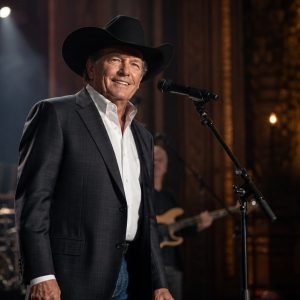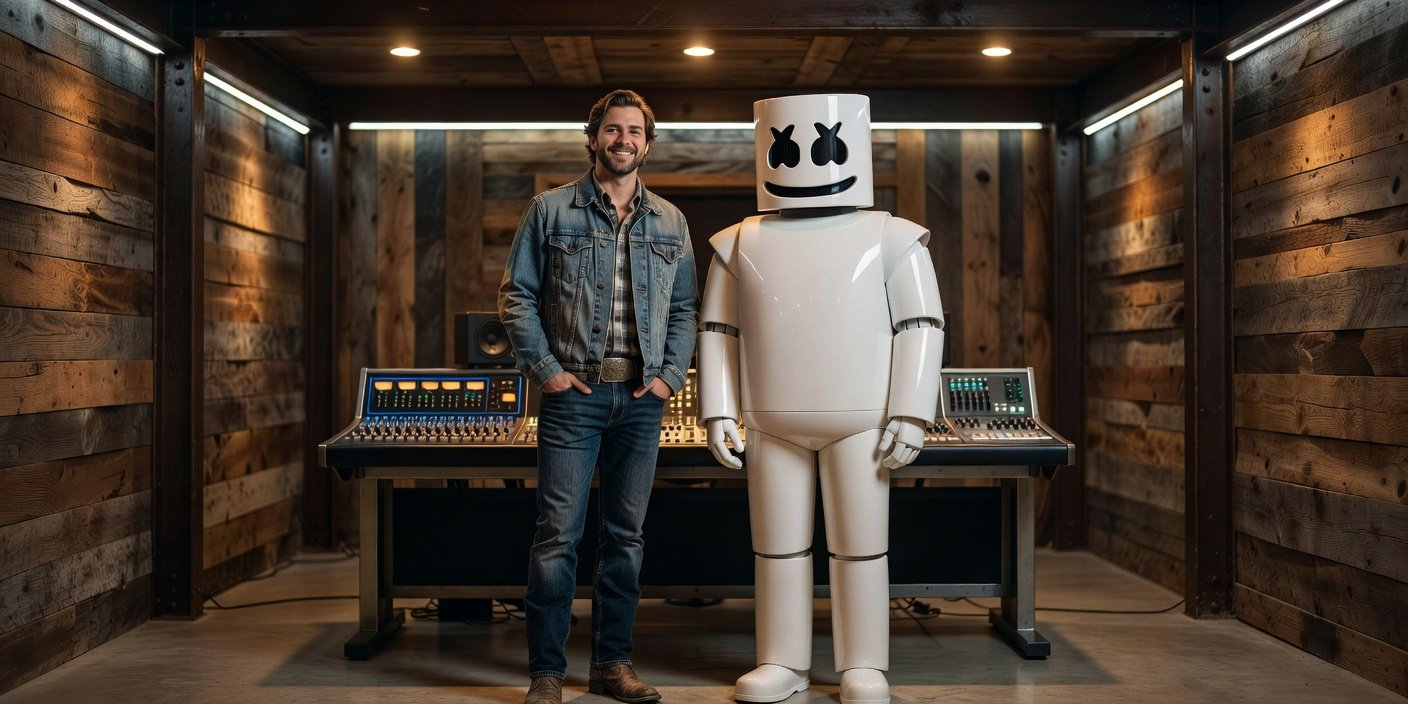
Thomas Rhett and Marshmello have officially released their highly anticipated collaboration, “Where We Go,” a high-energy track that bridges the gap between traditional country storytelling and cutting-edge electronic production. The release, which arrived on April 10, 2026, serves as a significant marker in the ongoing evolution of the “YeeDM” movement, solidifying Marshmello’s reputation as a genre-agnostic powerhouse while showcasing Thomas Rhett’s ability to navigate modern soundscapes without losing his roots.
Key Highlights
- Genre Synergy: “Where We Go” pairs shimmering, stadium-ready EDM synths with a prominent, twangy electric-guitar intro, creating a seamless hybrid sound.
- Lyrical Craft: The song leans into classic country tropes, including a notable name-drop of legend Conway Twitty, anchoring the electronic production in familiar lyrical territory.
- Strategic Release: The collaboration follows a massive marketing buildup, including social media teasers involving the artists sharing a “Would You Rather?” game, which drove fan engagement across platforms.
- Market Position: This track continues Marshmello’s strategic foray into the country charts, following successful collaborations with artists like Jelly Roll and Kane Brown.
The Sonic Convergence of Country and Electronic
Deconstructing the ‘Where We Go’ Soundscape
The production of “Where We Go” is a masterclass in modern cross-genre composition. At its core, the track is built on the foundation of a traditional country anthem. It opens with an unmistakable, twang-heavy electric guitar lick that signals to the listener exactly what kind of narrative is about to unfold. However, as the song progresses, Marshmello’s signature production style—characterized by polished, shimmering synth textures and a driving, four-on-the-floor beat—takes over.
This synthesis is not merely a clash of styles but a deliberate attempt to create a sound that fits both the intimacy of a local bar and the expansiveness of a festival main stage. The track moves from a mid-tempo, story-driven verse into a high-octane chorus that acts as the “drop” in EDM terms, while functioning as a “hook” in country terms. This dual-purpose design allows the song to cross over into dance playlists while simultaneously maintaining a presence on mainstream country radio.
The ‘YeeDM’ Phenomenon and Market Evolution
The term “YeeDM”—a portmanteau of “Yee-haw” and EDM—has shifted from a niche internet subculture to a dominant force in music marketing. In 2026, the lines between genre-defined radio stations have become increasingly porous. Marshmello, one of the most prolific producers of the last decade, has been at the forefront of this shift. By collaborating with Thomas Rhett, an artist who has historically maintained a firm grasp on the country mainstream, Marshmello is effectively leveraging two massive, albeit partially overlapping, audiences.
Historically, EDM-country crossovers were viewed as experiments. Today, they are calculated commercial strategies. The success of tracks like “Miles On It” with Kane Brown and “Holy Water” with Jelly Roll proved that country audiences are increasingly receptive to synthetic production if the lyrical substance remains authentic. “Where We Go” follows this blueprint by ensuring the storytelling—the bedrock of country music—remains the focus. The lyrics about driving, backroad memories, and simple romantic gestures resonate with the core demographics of Nashville, while the rhythmic foundation provides the high-energy stimulation desired by the electronic music crowd.
The Role of Lyrical Anchoring
One of the most effective aspects of “Where We Go” is its lyrical anchoring. By explicitly mentioning Conway Twitty, Rhett and the songwriting team are engaging in a dialogue with country music history. This is a sophisticated move; it provides cultural legitimacy to the song, signaling to traditionalists that despite the presence of a helmet-wearing EDM star, the track is still “country.” It bridges the gap between the past and the future of the genre, suggesting that while the medium of production may change, the soul of the genre—the narrative—remains static.
The Artist Synergy: Thomas Rhett’s Artistic Pivot
Thomas Rhett has spent the last several years expanding his sonic palette. Following the success of his album About a Woman and the recent ESPN Masters Tournament campaign featuring his take on “Georgia On My Mind,” Rhett has demonstrated a willingness to explore various facets of his identity as an artist. “Where We Go” is not a departure for him, but an expansion. It highlights his versatility.
For Marshmello, the collaboration is equally strategic. By aligning himself with artists like Rhett, he is not just borrowing their audience; he is actively reshaping the expectations for what a “Marshmello track” can be. This collaboration creates a “halo effect,” where the credibility of the country star elevates the producer’s work in the eyes of a demographic that might typically ignore dance music.
Implications for Radio and Streaming
The release of this track is expected to have a cascading effect on radio programming. As “Where We Go” climbs the charts, programmers will be faced with a familiar dilemma: where does a song like this live? The success of this track will likely determine how radio stations continue to program “crossover” hits. If the song reaches the top of the Country charts, it will validate the genre-blurring trend further, potentially opening the door for even more experimental collaborations between EDM producers and traditional country acts.
Furthermore, the digital strategy utilized to promote the song—including social media games and teasers—marks a shift in how country music is marketed. The “Would You Rather?” social media content, which highlighted the distinct personalities of Rhett and Marshmello, created a narrative arc that preceded the music itself. This “story-first” marketing approach is essential in the 2026 landscape, where listeners are as invested in the artist’s brand as they are in the song’s production.
The Future of Genre-Fluid Music
As we look toward the remainder of 2026, “Where We Go” will likely serve as a case study for future collaborations. The track proves that the key to modern genre-fluid music is balance. It requires the precision of a producer like Marshmello and the storytelling instinct of a writer/performer like Thomas Rhett. The song is not just a release; it is a signal of the changing guard in popular music, where the boundaries between “Electronic” and “Country” are becoming increasingly irrelevant, replaced by a singular, hyper-modern aesthetic that prioritizes energy, relatability, and sonic innovation.
FAQ: People Also Ask
1. What genre does the song ‘Where We Go’ fall into?
- It is a blend of modern Country and EDM, often referred to as “YeeDM.” It incorporates traditional country lyrical themes and guitar elements with high-energy electronic production.
2. Is this Marshmello’s first country collaboration?
- No, it is part of an ongoing series of country collaborations for Marshmello, following tracks with artists like Jelly Roll, Kane Brown, and Hudson Westbrook.
3. What is the significance of the Conway Twitty reference in the lyrics?
- Mentioning Conway Twitty, a country music legend, serves as a lyrical anchor that provides traditional country credibility to the song, bridging the gap between historical country and modern EDM production.
4. Where can I listen to ‘Where We Go’?
- The single is available on all major streaming platforms, including Spotify, Apple Music, and Amazon Music, as of April 10, 2026.